Tag Archives: Publication Bias

Guest Post by Jerry Brunner: Response to an Anonymous Reviewer

Introduction

Jerry Brunner is a recent emeritus from the Department of Statistics at the University of Toronto Mississauga. Jerry first started in psychology, but was frustrated by the unscientific practices he observed in graduate school. He went on to become a professor in statistics. Thus, he is not only an expert in statistis. He also understands the methodological problems in psychology.

Sometime in the wake of the replication crisis around 2014/15, I went to his office to talk to him about power and bias detection. . Working with Jerry was educational and motivational. Without him z-curve would not exist. We spend years on trying different methods and thinking about the underlying statistical assumptions. Simulations often shattered our intuitions. The Brunner and Schimmack (2020) article summarizes all of this work.

A few years later, the method is being used to examine the credibility of published articles across different research areas. However, not everybody is happy about a tool that can reveal publication bias, the use of questionable research practices, and a high risk of false positive results. An anonymous reviewer dismissed z-curve results based on a long list of criticisms (Post: Dear Anonymous Reviewer). It was funny to see how ChatGPT responds to these criticisms (Comment). However, the quality of ChatGPT responses is difficult to evaluate. Therefore, I am pleased to share Jerry’s response to the reviewer’s comments here. Let’s just say that the reviewer was wise to make their comments anonymously. Posting the review and the response in public also shows why we need open reviews like the ones published in Meta-Psychology by the reviewers of our z-curve article. Hidden and biased reviews are just one more reason why progress in psychology is so slow.

Jerry Brunner’s Response

This is Jerry Brunner, the “Professor of Statistics” mentioned the post. I am also co-author of Brunner and Schimmack (2020). Since the review Uli posted is mostly an attack on our joint paper (Brunner and Schimmack, 2020), I thought I’d respond.

First of all, z-curve is sort of a moving target. The method described by Brunner and Schimmack is strictly a way of estimating population mean power based on a random sample of tests that have been selected for statistical significance. I’ll call it z-curve 1.0. The algorithm has evolved over time, and the current z-curve R package (available at https://cran.r-project.org/web/packages/zcurve/index.html) implements a variety of diagnostics based on a sample of p-values. The reviewer’s comments apply to z-curve 1.0, and so do my responses. This is good from my perspective, because I was in on the development of z-curve 1.0, and I believe I understand it pretty well. When I refer to z-curve in the material that follows, I mean z-curve 1.0. I do believe z-curve 1.0 has some limitations, but they do not overlap with the ones suggested by the reviewer.

Here are some quotes from the review, followed by my answers.

(1) “… z-curve analysis is based on the concept of using an average power estimate of completed studies (i.e., post hoc power analysis). However, statisticians and methodologists have written about the problem of post hoc power analysis …”

This is not accurate. Post-hoc power analysis is indeed fatally flawed; z-curve is something quite different. For later reference, in the “observed” power method, sample effect size is used to estimate population effect size for a single study. Estimated effect size is combined with observed sample size to produce an estimated non-centrality parameter for the non-central distribution of the test statistic, and estimated power is calculated from that, as an area under the curve of the non-central distribution. So, the observed power method produces an estimated power for an individual study. These estimates have been found to be too noisy for practical use.

The confusion of z-curve with observed power comes up frequently in the reviewer’s comments. To be clear, z-curve does not estimate effect sizes, nor does it produce power estimates for individual studies.

(2) “It should be noted that power is not a property of a (completed) study (fixed data). Power is a performance measure of a procedure (statistical test) applied to an infinite number of studies (random data) represented by a sampling distribution. Thus, what one estimates from completed study is not really “power” that has the properties of a frequentist probability even though the same formula is used. Average power does not solve this ontological problem (i.e., misunderstanding what frequentist probability is; see also McShane et al., 2020). Power should always be about a design for future studies, because power is the probability of the performance of a test (rejecting the null hypothesis) over repeated samples for some specified sample size, effect size, and Type I error rate (see also Greenland et al., 2016; O’Keefe, 2007). z-curve, however, makes use of this problematic concept of average power (for completed studies), which brings to question the validity of z-curve analysis results.”

The reviewer appears to believe that once the results of a study are in, the study no longer has a power. To clear up this misconception, I will describe the model on which z-curve is based.

There is a population of studies, each with its own subject population. One designated significance test will be carried out on the data for each study. Given the subject population, the procedure and design of the study (including sample size), significance level and the statistical test employed, there is a probability of rejecting the null hypothesis. This probability has the usual frequentist interpretation; it’s the long-term relative frequency of rejection based on (hypothetical) repeated sampling from the particular subject population. I will use the term “power” for the probability of rejecting the null hypothesis, whether or not the null hypothesis is exactly true.

Note that the power of the test — again, a member of a population of tests — is a function of the design and procedure of the study, and also of the true state of affairs in the subject population (say, as captured by effect size).

So, every study in the population of studies has a power. It’s the same before any data are collected, and after the data are collected. If the study were replicated exactly with a fresh sample from the same population, the probability of observing significant results would be exactly the power of the study — the true power.

This takes care of the reviewer’s objection, but let me continue describing our model, because the details will be useful later.

For each study in the population of studies, a random sample is drawn from the subject population, and the null hypothesis is tested. The results are either significant, or not. If the results are not significant, they are rejected for publication, or more likely never submitted. They go into the mythical “file drawer,” and are no longer available. The studies that do obtain significant results form a sub-population of the original population of studies. Naturally, each of these studies has a true power value. What z-curve is trying to estimate is the population mean power of the studies with significant results.

So, we draw a random sample from the population of studies with significant results, and use the reported results to estimate population mean power — not of the original population of studies, but only of the subset that obtained significant results. To us, this roughly corresponds to the mean power in a population of published results in a particular field or sub-field.

Note that there are two sources of randomness in the model just described. One arises from the random sampling of studies, and the other from random sampling of subjects within studies. In an appendix containing the theorems, Brunner and Schimmack liken designing a study (and choosing a test) to the manufacture of a biased coin with probability of heads equal to the power. All the coins are tossed, corresponding to running the subjects, collecting the data and carrying out the tests. Then the coins showing tails are discarded. We seek to estimate the mean P(Head) for all the remaining coins.

(3) “In Brunner and Schimmack (2020), there is a problem with ‘Theorem 1 states that success rate and mean power are equivalent …’ Here, the coin flip with a binary outcome is a process to describe significant vs. nonsignificant p-values. Focusing on observed power, the problem is that using estimated effect sizes (from completed studies) have sampling variability and cannot be assumed to be equivalent to the population effect size.”

There is no problem with Theorem 1. The theorem says that in the coin tossing experiment just described, suppose you (1) randomly select a coin from the population, and (2) toss it — so there are two stages of randomness. Then the probability of observing a head is exactly equal to the mean P(Heads) for the entire set of coins. This is pretty cool if you think about it. The theorem makes no use of the concept of effect size. In fact, it’s not directly about estimation at all; it’s actually a well-known result in pure probability, slightly specialized for this setting. The reviewer says “Focusing on observed power …” But why would he or she focus on observed power? We are talking about true power here.

(4) “Coming back to p-values, these statistics have their own distribution (that cannot be derived unless the effect size is null and the p-value follows a uniform distribution).

They said it couldn’t be done. Actually, deriving the distribution of the p-value under the alternative hypothesis is a reasonable homework problem for a masters student in statistics. I could give some hints …

(5) “Now, if the counter argument taken is that z-curve does not require an effect size input to calculate power, then I’m not sure what z-curve calculates because a value of power is defined by sample size, effect size, Type I error rate, and the sampling distribution of the statistical procedure (as consistently presented in textbooks for data analysis).”

Indeed, z-curve uses only p-values, from which useful estimates of effect size cannot be recovered. As previously stated, z-curve does not estimate power for individual studies. However, the reviewer is aware that p-values have a probability distribution. Intuitively, shouldn’t the distribution of p-values and the distribution of power values be connected in some way? For example, if all the null hypotheses in a population of tests were true so that all power values were equal to 0.05, then the distribution of p-values would be uniform on the interval from zero to one. When the null hypothesis of a test is false, the distribution of the p-value is right skewed and strictly decreasing (except in pathological artificial cases), with more of the probability piling up near zero. If average power were very high, one might expect a distribution with a lot of very small p-values. The point of this is just that the distribution of p-values surely contains some information about the distribution of power values. What z-curve does is to massage a sample of significant p-values to produce an estimate, not of the entire distribution of power after selection, but just of its population mean. It’s not an unreasonable enterprise, in spite of what the reviewer thinks. Also, it works well for large samples of studies. This is confirmed in the simulation studies reported by Brunner and Schimmack.

(6) “The problem of Theorem 2 in Brunner and Schimmack (2020) is assuming some distribution of power (for all tests, effect sizes, and sample sizes). This is curious because the calculation of power is based on the sampling distribution of a specific test statistic centered about the unknown population effect size and whose variance is determined by sample size. Power is then a function of sample size, effect size, and the sampling distribution of the test statistic.”

Okay, no problem. As described above, every study in the population of studies has its own test statistic, its own true (not estimated) effect size, its own sample size — and therefore its own true power. The relative frequency histogram of these numbers is the true population distribution of power.

(7) “There is no justification (or mathematical derivation) to show that power follows a uniform or beta distribution (e.g., see Figure 1 & 2 in Brunner and Schimmack, 2000, respectively).”

Right. These were examples, illustrating the distribution of power before versus after selection for significance — as given in Theorem 2. Theorem 2 applies to any distribution of true power values.

(8) “If the counter argument here is that we avoid these issues by transforming everything into a z-score, there is no justification that these z-scores will follow a z-distribution because the z-score is derived from a normal distribution – it is not the transformation of a p-value that will result in a z-distribution of z-scores … it’s weird to assume that p-values transformed to z-scores might have the standard error of 1 according to the z-distribution …”

The reviewer is objecting to Step 1 of constructing a z-curve estimate, given on page 6 of Brunner and Schimmack (2020). We start with a sample of significant p-values, arising from a variety of statistical tests, various F-tests, chi-squared tests, whatever — all with different sample sizes. Then we pretend that all the tests were actually two-sided z-tests with the results in the predicted direction, equivalent to one-sided z-tests with significance level 0.025. Then we transform the p-values to obtain the z statistics that would have generated them, had they actually been z-tests. Then we do some other stuff to the z statistics.

But as the reviewer notes, most of the tests probably are not z-tests. The distributions of their p-values, which depend on the non-central distributions of their test statistics, are different from one another, and also different from the distribution for genuine z-tests. Our paper describes it as an approximation, but why should it be a good approximation? I honestly don’t know, and I have given it a lot of thought. I certainly would not have come up with this idea myself, and when Uli proposed it, I did not think it would work. We both came up with a lot of estimation methods that did not work when we tested them out. But when we tested this one, it was successful. Call it a brilliant leap of intuition on Uli’s part. That’s how I think of it.

Uli’s comment.
It helps to know your history. Well before psychologists focused on effect sizes for meta-analysis, Fisher already had a method to meta-analyze p-values. P-Curve is just a meta-analysis of p-values with a selection model. However, p-values have ugly distributions and Stouffer proposed the transformation of p-values into z-scores to conduct meta-analyses. This method was used by Rosenthal to compute the fail-safe-N, one of the earliest methods to evaluate the credibility of published results (Fail-Safe-N). Ironically, even the p-curve app started using this transformation (p-curve changes). Thus, p-curve is really a version of z-curve. The problem with p-curve is that it has only one parameter and cannot model heterogeneity in true power. This is the key advantage of z-curve.1.0 over p-curve (Brunner & Schimmack, 2020). P-curve is even biased when all studies have the same population effect size, but different sample sizes, which leads to heterogeneity in power (Brunner, 2018].

Such things are fairly common in statistics. An idea is proposed, and it seems to work. There’s a “proof,” or at least an argument for the method, but the proof does not hold up. Later on, somebody figures out how to fill in the missing technical details. A good example is Cox’s proportional hazards regression model in survival analysis. It worked great in a large number of simulation studies, and was widely used in practice. Cox’s mathematical justification was weak. The justification starts out being intuitively reasonable but not quite rigorous, and then deteriorates. I have taught this material, and it’s not a pleasant experience. People used the method anyway. Then decades after it was proposed by Cox, somebody else (Aalen and others) proved everything using a very different and advanced set of mathematical tools. The clean justification was too advanced for my students.

Another example (from mathematics) is Fermat’s last theorem, which took over 300 years to prove. I’m not saying that z-curve is in the same league as Fermat’s last theorem, just that statistical methods can be successful and essentially correct before anyone has been able to provide a rigorous justification.

Still, this is one place where the reviewer is not completely mixed up.

Another Uli comment
Undergraduate students are often taught different test statistics and distributions as if they are totally different. However, most tests in psychology are practically z-tests. Just look at a t-distribution with N = 40 (df = 38) and try to see the difference to a standard normal distribution. The difference is tiny and invisible when you increase sample sizes above 40! And F-tests. F-values with 1 experimenter degree of freedom are just squared t-values, so the square root of these is practically a z-test. But what about chi-square? Well, with 1 df, chi-square is just a squared z-score, so we can use the square root and have a z-score. But what if we don’t have two groups, but compute correlations or regressions? Well, the statistical significance test uses the t-distribution and sample sizes are often well above 40. So, t and z are practically identical. It is therefore not surprising to me that approximating empirical results with different test-statistics can be approximated with the standard normal distribution. We could make teaching statistics so much easier, instead of confusing students with F-distributions. The only exception are complex designs with 3 x 4 x 5 ANOVAs, but they don’t really test anything and are just used to p-hack. Rant over. Back to Jerry.

(9) “It is unclear how Theorem 2 is related to the z-curve procedure.”

Theorem 2 is about how selection for significance affects the probability distribution of true power values. Z-curve estimates are based only on studies that have achieved significant results; the others are hidden, by a process that can be called publication bias. There is a fundamental distinction between the original population of power values and the sub-population belonging to studies that produce significant results. The theorems in the appendix are intended to clarify that distinction. The reviewer believes that once significance has been observed, the studies in question no longer even have true power values. So, clarification would seem to be necessary.

(10) “In the description of the z-curve analysis, it is unclear why z-curve is needed to calculate “average power.” If p < .05 is the criterion of significance, then according to Theorem 1, why not count up all the reported p-values and calculate the proportion in which the p-values are significant?”

If there were no selection for significance, this is what a reasonable person would do. But the point of the paper, and what makes the estimation problem challenging, is that all we can observe are statistics from studies with p < 0.05. Publication bias is real, and z-curve is designed to allow for it.

(11) “To beat a dead horse, z-curve makes use of the concept of “power” for completed studies. To claim that power is a property of completed studies is an ontological error …”

Wrong. Power is a feature of the design of a study, the significance test, and the subject population. All of these features still exist after data have been collected and the test is carried out.

Uli and Jerry comment:
Whenever a psychologist uses the word “ontological,” be very skeptical. Most psychologists who use the word understand philosophy as well as this reviewer understands statistics.

(12) “The authors make a statement that (observed) power is the probability of exact replication. However, there is a conceptual error embedded in this statement. While Greenwald et al. (1996, p. 1976) state “replicability can be computed as the power of an exact replication study, which can be approximated by [observed power],” they also explicitly emphasized that such a statement requires the assumption that the estimated effect size is the same as the unknown population effect size which they admit cannot be met in practice.”

Observed power (a bad estimate of true power) is not the probability of significance upon exact replication. True power is the probability of significance upon exact replication. It’s based on true effect size, not estimated effect size. We were talking about true power, and we mistakenly thought that was obvious.

(13) “The basis of supporting the z-curve procedure is a simulation study. This approach merely confirms what is assumed with simulation and does not allow for the procedure to be refuted in any way (cf. Popper’s idea of refutation being the basis of science.) In a simulation study, one assumes that the underlying process of generating p-values is correct (i.e., consistent with the z-curve procedure). However, one cannot evaluate whether the p-value generating process assumed in the simulation study matches that of empirical data. Stated a different way, models about phenomena are fallible and so we find evidence to refute and corroborate these models. The simulation in support of the z-curve does not put the z-curve to the test but uses a model consistent with the z-curve (absent of empirical data) to confirm the z-curve procedure (a tautological argument). This is akin to saying that model A gives us the best results, and based on simulated data on model A, we get the best results.”

This criticism would have been somewhat justified if the simulations had used p-values from a bunch of z-tests. However, they did not. The simulations reported in the paper are all F-tests with one numerator degree of freedom, and denominator degrees of freedom depending on the sample size. This covers all the tests of individual regression coefficients in multiple regression, as well as comparisons of two means using two-sample (and even matched) t-tests. Brunner and Schmmack say (p. 8)

Because the pattern of results was similar for F-tests
and chi-squared tests and for different degrees of freedom,
we only report details for F-tests with one numerator
degree of freedom; preliminary data mining of
the psychological literature suggests that this is the case
most frequently encountered in practice. Full results are
given in the supplementary materials.

So I was going to refer the reader (and the anonymous reviewer, who is probably not reading this post anyway) to the supplementary materials. Fortunately I checked first, and found that the supplementary materials include a bunch of OSF stuff like the letter submitting the article for publication, and the reviewers’ comments and so on — but not the full set of simulations. Oops.

All the code and the full set of simulation results is posted at

https://www.utstat.utoronto.ca/brunner/zcurve2018

You can download all the material in a single file at

https://www.utstat.utoronto.ca/brunner/zcurve2018.zip

After expanding, just open index.html in a browser.

Actually we did a lot more simulation studies than this, but you have to draw the line somewhere. The point is that z-curve performs well for large numbers of studies with chi-squared test statistics as well as F statistics — all with varying degrees of freedom.

(14) “The simulation study was conducted for the performance of the z-curve on constrained scenarios including F-tests with df = 1 and not for the combination of t-tests and chi-square tests as applied in the current study. I’m not sure what to make of the z-curve performance for the data used in the current paper because the simulation study does not provide evidence of its performance under these unexplored conditions.”

Now the reviewer is talking about the paper that was actually under review. The mistake is natural, because of our (my) error in not making sure that the full set of simulations was included in the supplementary materials. The conditions in question are not unexplored; they are thoroughly explored, and the accuracy of z-curve for large samples is confirmed.

(15+) There are some more comments by the reviewer, but these are strictly about the paper under review, and not about Brunner and Schimmack (2020). So, I will leave any further response to others.

Replicability Report for the Journal ‘Evolutionary Psychology’

Authors: Maria Soto and Ulrich Schimmack

Citation: Soto, M. & Schimmack, U. (2024, June, 24/06/24).  2024 Replicability Report for the Journal 'Evolutionary Psychology'.  Replicability Index. 
https://replicationindex.com/2024/06/24/rr24-evopsy/

Introduction

In the 2010s, it became apparent that empirical psychology had a replication problem. When psychologists tested the replicability of 100 results, they found that only 36% of the 97 significant results in original studies could be reproduced (Open Science Collaboration, 2015). In addition, several prominent cases of research fraud further undermined trust in published results. Over the past decade, several proposals were made to improve the credibility of psychology as a science. Replicability Reports aim to improve the credibilty of psychological science by examining the amount of publication bias and the strength of evidence for empirical claims in psychology journals.

The main problem in psychological science is the selective publishing of statistically significant results and the blind trust in statistically significant results as evidence for researchers’ theoretical claims. Unfortunately, psychologists have been unable to self-regulate their behaviour and continue to use unscientific practices to hide evidence that disconfirms their predictions. Moreover, ethical researchers who do not use unscientific practices are at a disadvantage in a game that rewards publishing many articles without concern about these findings’ replicability.

My colleagues and I have developed a statistical tool that can reveal the use of unscientific practices and predict the outcome of replication studies (Brunner & Schimmack, 2021Bartos & Schimmack, 2022). This method is called z-curve. Z-curve cannot be used to evaluate the credibility of a single study. However, it can provide valuable information about the research practices in a particular research domain.

Replicability-Reports (RR) use z-curve to provide information about psychological journal research and publication practices. This information can aid authors choose journals they want to publish in, provide feedback to journal editors who influence selection bias and replicability of published results, and, most importantly, to readers of these journals.

Evolutionary Psychology

Evolutionary Psychology was founded in 2003. The journal focuses on publishing empirical theoretical and review articles investigating human behaviour from an evolutionary perspective. On average, Evolutionary Psychology publishes about 35 articles in 4 annual issues.

As a whole, evolutionary psychology has produced both highly robust and questionable results. Robust results have been found for sex differences in behaviors and attitudes related to sexuality. Questionable results have been reported for changes in women’s attitudes and behaviors as a function of hormonal changes throughout their menstrual cycle.

According to Web of Science, the impact factor of Evolutionary Psychology ranks 88th in the Experimental Psychology category (Clarivate, 2024). The journal has a 48 H-Index (i.e., 48 articles have received 48 or more citations).

In its lifetime, Evolutionary Psychology has published over 800 articles The average citation rate in this journal is 13.76 citations per article. So far, the journal’s most cited article has been cited 210 times. The article was published in 2008 and investigated the influence of women’s mate value on standards for a long-term mate (Buss & Shackelford, 2008).

The current Editor-in-Chief is Professor Todd K. Shackelford. Additionally, the journal has four other co-editors Dr. Bernhard Fink, Professor Mhairi Gibson, Professor Rose McDermott, and Professor David A. Puts.

Extraction Method

Replication reports are based on automatically extracted test statistics such as F-tests, t-tests, z-tests, and chi2-tests. Additionally, we extracted 95% confidence intervals of odds ratios and regression coefficients. The test statistics were extracted from collected PDF files using a custom R-code. The code relies on the pdftools R package (Ooms, 2024) to render all textboxes from a PDF file into character strings. Once converted the code proceeds to systematically extract the test statistics of interest (Soto & Schimmack, 2024). PDF files identified as editorials, review papers and meta-analyses were excluded. Meta-analyses were excluded to avoid the inclusion of test statistics that were not originally published in Evolution & Human Behavior. Following extraction, the test statistics are converted into absolute z-scores.

Results For All Years

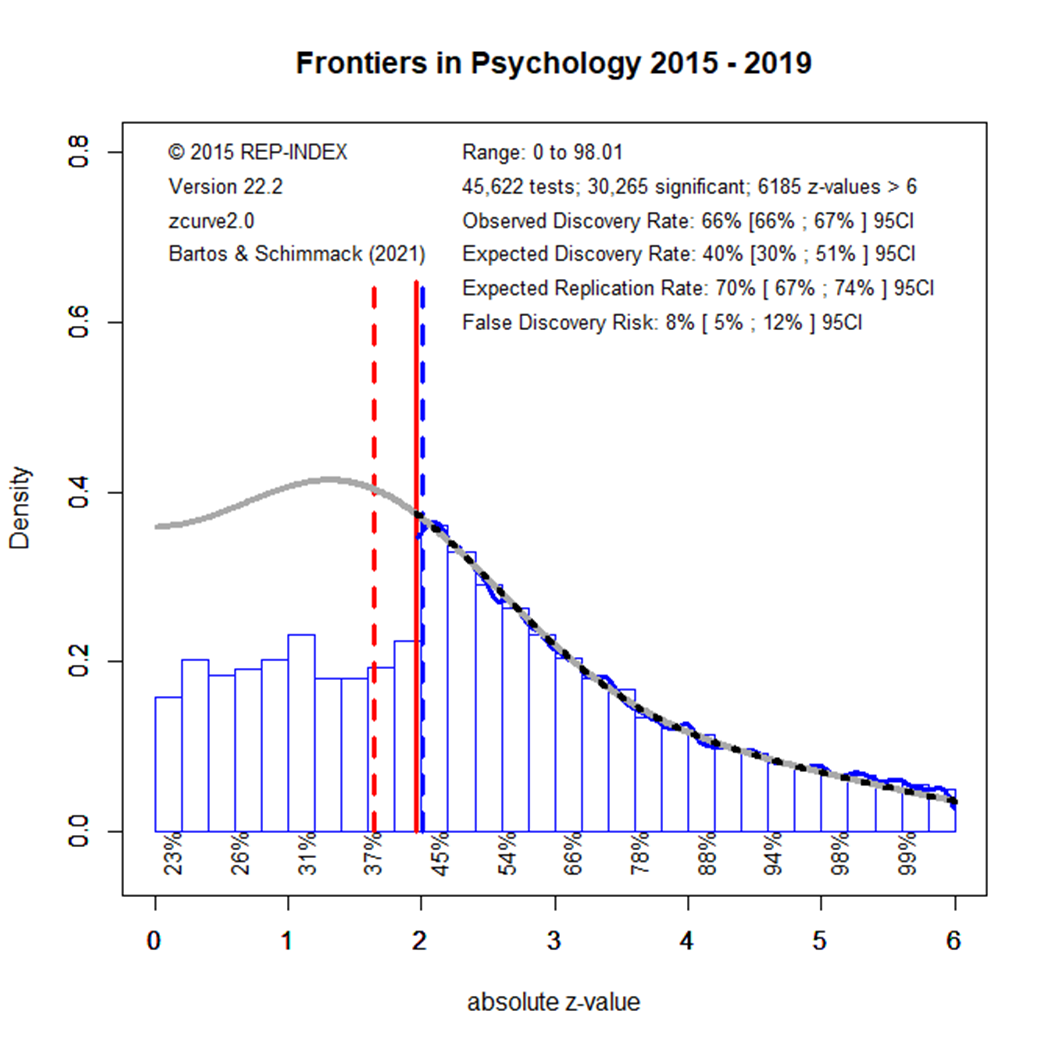
Figure 1 shows a z-curve plot for all articles from 2003-2023 (see Schimmack, 2023, for a detailed description of z-curve plots). However, the total available test statistics available for 2003, 2004 and 2005 were too low to be used individually. Therefore, these years were joined to ensure the plot had enough test statistics for each year. The plot is essentially a histogram of all test statistics converted into absolute z-scores (i.e., the direction of an effect is ignored). Z-scores can be interpreted as the strength of evidence against the null hypothesis that there is no statistical relationship between two variables (i.e., the effect size is zero and the expected z-score is zero). A z-curve plot shows the standard criterion of statistical significance (alpha = .05, z = 1.96) as a vertical red dotted line.

Figure 1

Z-curve plots are limited to values less than z = 6. The reason is that values greater than 6 are so extreme that a successful replication is all but certain unless the value is a computational error or based on fraudulent data. The extreme values are still used for the computation of z-curve statistics but omitted from the plot to highlight the shape of the distribution for diagnostic z-scores in the range from 2 to 6. Using the expectation maximization (EM) algorithm, Z-curve estimates the optimal weights for seven components located at z-values of 0, 1, …. 6 to fit the observed statistically significant z-scores. The predicted distribution is shown as a blue curve. Importantly, the model is fitted to the significant z-scores, but the model predicts the distribution of non-significant results. This makes it possible to examine publication bias (i.e., selective publishing of significant results). Using the estimated distribution of non-significant and significant results, z-curve provides an estimate of the expected discovery rate (EDR); that is, the percentage of significant results that were actually obtained without selection for significance. Using Soric’s (1989) formula the EDR is used to estimate the false discovery risk; that is, the maximum number of significant results that are false positives (i.e., the null-hypothesis is true).

Selection for Significance

The extent of selection bias in a journal can be quantified by comparing the Observed Discovery Rate (ODR) of 68%, 95%CI = 67% to 70% with the Expected Discovery Rate (EDR) of 49%, 95%CI = 26%-63%. The ODR is higher than the upper limit of the confidence interval for the EDR, suggesting the presence of selection for publication. Even though the distance between the ODR and the EDR estimate is narrower than those commonly seen in other journals the present results may underestimate the severity of the problem. This is because the analysis is based on all statistical results. Selection bias is even more problematic for focal hypothesis tests and the ODR for focal tests in psychology journals is often close to 90%.

Expected Replication Rate

The Expected Replication Rate (ERR) estimates the percentage of studies that would produce a significant result again if exact replications with the same sample size were conducted. A comparison of the ERR with the outcome of actual replication studies shows that the ERR is higher than the actual replication rate (Schimmack, 2020). Several factors can explain this discrepancy, such as the difficulty of conducting exact replication studies. Thus, the ERR is an optimist estimate. A conservative estimate is the EDR. The EDR predicts replication outcomes if significance testing does not favour studies with higher power (larger effects and smaller sampling error) because statistical tricks make it just as likely that studies with low power are published. We suggest using the EDR and ERR in combination to estimate the actual replication rate.

The ERR estimate of 72%, 95%CI = 67% to 77%, suggests that the majority of results should produce a statistically significant, p < .05, result again in exact replication studies. However, the EDR of 49% implies that there is some uncertainty about the actual replication rate for studies in this journal and that the success rate can be anywhere between 49% and 72%.

False Positive Risk

The replication crisis has led to concerns that many or even most published results are false positives (i.e., the true effect size is zero). Using Soric’s formula (1989), the maximum false discovery rate can be calculated based on the EDR.

The EDR of 49% implies a False Discovery Risk (FDR) of 6%, 95%CI = 3% to 15%, but the 95%CI of the FDR allows for up to 15% false positive results. This estimate contradicts claims that most published results are false (Ioannidis, 2005).

Changes Over Time

One advantage of automatically extracted test-statistics is that the large number of test statistics makes it possible to examine changes in publication practices over time. We were particularly interested in changes in response to awareness about the replication crisis in recent years.

Z-curve plots for every publication year were calculated to examine time trends through regression analysis. Additionally, the degrees of freedom used in F-tests and t-tests were used as a metric of sample size to observe if these changed over time. Both linear and quadratic trends were considered. The quadratic term was included to observe if any changes occurred in response to the replication crisis. That is, there may have been no changes from 2000 to 2015, but increases in EDR and ERR after 2015.

Degrees of Freedom

Figure 2 shows the median and mean degrees of freedom used in F-tests and t-tests reported in Evolutionary Psychology. The mean results are highly variable due to a few studies with extremely large sample sizes. Thus, we focus on the median to examine time trends. The median degrees of freedom over time was 121.54, ranging from 75 to 373. Regression analyses of the median showed a significant linear increase by 6 degrees of freedom per year, b = 6.08, SE = 2.57, p = 0.031. However, there was no evidence that the replication crisis influenced a significant increase in sample sizes as seen by the lack of a significant non-linear trend and a small regression coefficient, b = 0.46, SE = 0.53, p = 0.400.

Figure 2

Observed and Expected Discovery Rates

Figure 3 shows the changes in the ODR and EDR estimates over time. There were no significant linear, b = -0.52 (SE = 0.26 p = 0.063) or non-linear, b = -0.02 (SE = 0.05, p = 0.765) trends observed in the ODR estimate. The regression results for the EDR estimate showed no significant linear, b = -0.66 (SE = 0.64 p = 0.317) or non-linear, b = 0.03 (SE = 0.13 p = 0.847) changes over time. These findings indicate the journal has not increased its publication of non-significant results and continues to report more significant results than one would predict based on the mean power of studies.

Expected Replicability Rates and False Discovery Risks

Figure 4 depicts the false discovery risk (FDR) and the Estimated Replication Rate (ERR). It also shows the Expected Replication Failure rate (EFR = 1 – ERR). A comparison of the EFR with the FDR provides information for the interpretation of replication failures. If the FDR is close to the EFR, many replication failures may be due to false positive results in original studies. In contrast, if the FDR is low, most replication failures will likely be false negative results in underpowered replication studies.

The ERR estimate did not show a significant linear increase over time, b = 0.36, SE = 0.24, p = 0.165. Additionally, no significant non-linear trend was observed, b = -0.03, SE = 0.05, p = 0.523. These findings suggest the increase in sample sizes did not contribute to a statistically significant increase in the power of the published results. These results suggests that replicability of results in this journal has not increased over time and that the results in Figure 1 can be applied to all years.

Figure 4

Visual inspection of Figure 4 depicts the EFR between 30% and 40% and an FDR between 0 and 10%. This suggests that more than half of replication failures are likely to be false negatives in replication studies with the same sample sizes rather than false positive results in the original studies. Studies with large sample sizes and small confidence intervals are needed to distinguish between these two alternative explanations for replication failures.

Adjusting Alpha

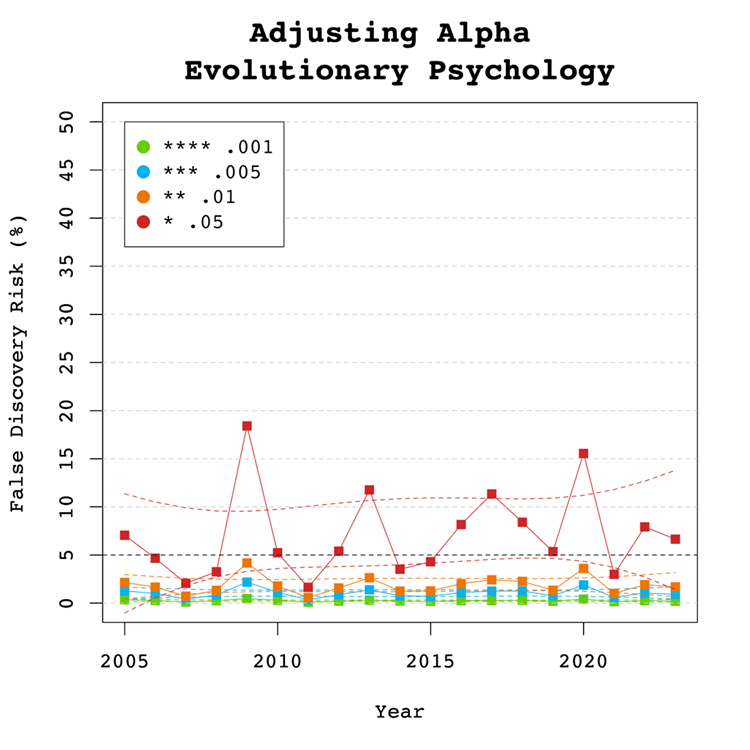
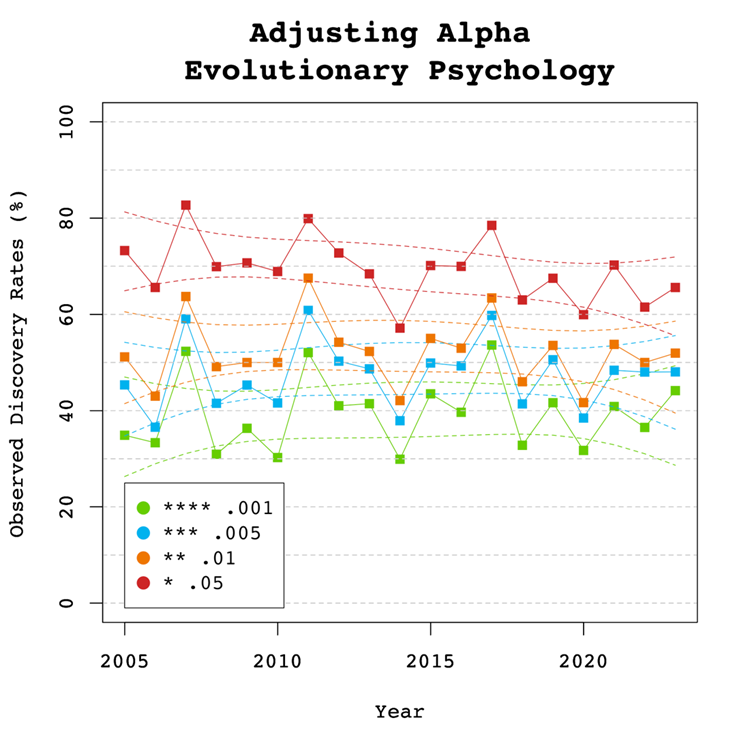
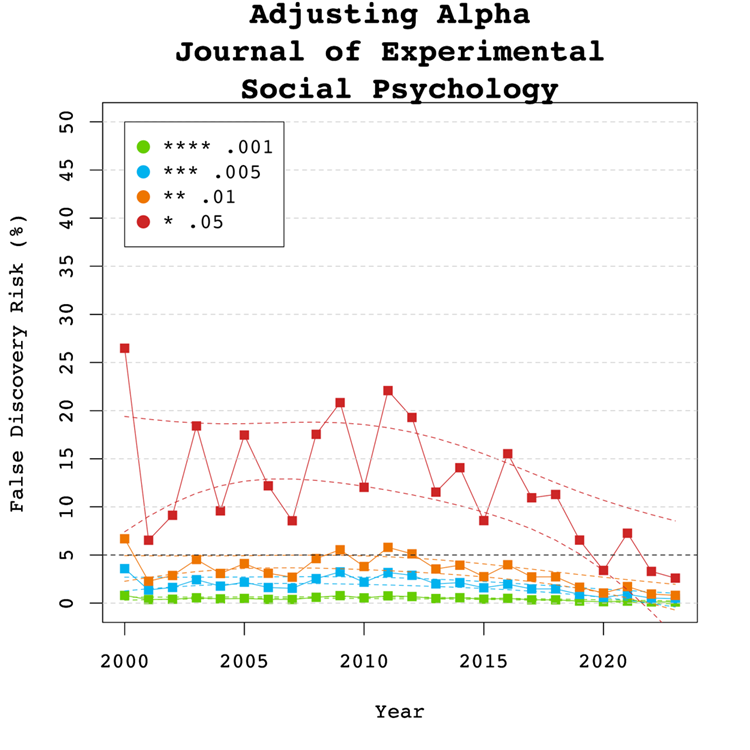
A simple solution to a crisis of confidence in published results is to adjust the criterion to reject the null-hypothesis. For example, some researchers have proposed to set alpha to .005 to avoid too many false positive results. With z-curve we can calibrate alpha to keep the false discovery risk at an acceptable level without discarding too many true positive results. To do so, we set alpha to .05, .01, .005, and .001 and examined the false discovery risk.

Figure 5

Figure 5 shows that the conventional criterion of p < .05 produces false discovery risks above 5%. The high variability in annual estimates also makes it difficult to provide precise estimates of the FDR. However, adjusting alpha to .01 is sufficient to produce an FDR with tight confidence intervals below 5%. The benefits of reducing alpha further to .005 or .001 are minimal.

Figure 6

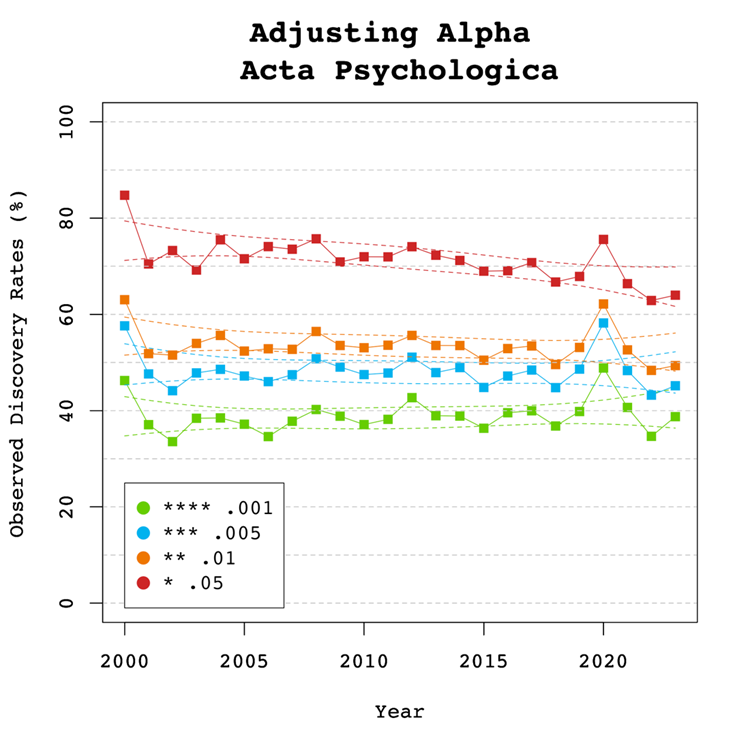
Figure 6 shows the impact of lowering the significance criterion, alpha, on the discovery rate (lower alpha implies fewer significant results). In Evolutionary Psychology lowering alpha to .01 reduces the observed discovery rate by about 20 to 10 percentage points. This implies that 20% of results reported p-values between .05 and .01. These results often have low success rates in actual replication studies (OSC, 2015). Thus, our recommendation is to set alpha to .01 to reduce the false positive risk to 5% and to disregard studies with weak evidence against the null-hypothesis. These studies require actual successful replications with larger samples to provide credible evidence for an evolutionary hypothesis.

There are relatively few studies with p-values between .01 and .005. Thus, more conservative researchers can use alpha = .005 without losing too many additional results.

Limitations

The main limitation of these results is the use of automatically extracted test statistics. This approach cannot distinguish between theoretically important statistical results and other results that are often reported but do not test focal hypotheses (e.g., testing the statistical significance of a manipulation check, reporting a non-significant result for a factor in a complex statistical design that was not expected to produce a significant result).

To examine the influence of automatic extraction on our results, we can compare the results to hand-coding results of over 4,000 hand-coded focal hypotheses in over 40 journals in 2010 and 2020. The ODR was 90% around 2010 and 88% around 2020. Thus, the tendency to report significant results for focal hypothesis tests is even higher than the ODR for all results and there is no indication that this bias has decreased notably over time. The ERR increased a bit from 61% to 67%, but these values are a bit lower than those reported here. Thus, it is possible that focal tests also have lower average power than other tests, but this difference seems to be small. The main finding is that the publishing of non-significant results for focal tests remains an exception in psychology journals and probably also in this journal.

One concern about the publication of our results is that it merely creates a new criterion to game publications. Rather than trying to get p-values below .05, researchers may use tricks to get p-values below .01. However, this argument ignores that it becomes increasingly harder to produce lower p-values with tricks (Simmons et al., 2011). Moreover, z-curve analysis makes it easy to see selection bias for different levels of significance. Thus, a more plausible response to these results is that researchers will increase sample sizes or use other methods to reduce sampling error to increase power.

Conclusion

The replicability report shows that the average power to report a significant result (i.e., a discovery) ranges from 49% to 72% in Evolutionary Psychology. This finding is higher than previous estimates observed in evolutionary psychology journals. However, the confidence intervals are wide and suggest that many published studies remain underpowered. The report did not capture any significant changes over time in the power and replicability as captured by the EDR and the ERR estimates. The false positive risk is modest and can be controlled by setting alpha to .01. Replication attempts of original findings with p-values above .01 should increase sample sizes to produce more conclusive evidence. Lastly, the journal shows clear evidence of selection bias.

There are several ways, the current or future editors of this journal can improve the credibility of results published in this journal. First, results with weak evidence (p-values between .05 and .01) should only be reported as suggestive results that require replication or even request a replication before publication. Second, editors should try to reduce publication bias by prioritizing research questions over results. A well-conducted study with an important question should be published even if the results are not statistically significant. Pre-registration and registered reports can help to reduce publication bias. Editors may also ask for follow-up studies with higher power to follow up on a non-significant result.

Publication bias also implies that point estimates of effect sizes are inflated. It is therefore important to take uncertainty in these estimates into account. Small samples with large sampling errors are usually unable to provide meaningful information about effect sizes and conclusions should be limited to the direction of an effect.

The present results serve as a benchmark for future years to track progress in this journal to ensure trust in research by evolutionary psychologists.

Replicability Report 2024: Acta Psychologica

Authors: Maria Soto and Ulrich Schimmack

Citation: Soto, M. & Schimmack, U. (2024, July 4/06/24).  2024 Replicability Report for the Journal 'Acta Psychologica'.  Replicability Index. 
https://replicationindex.com/2024/07/04/rr24-actapsy/

Introduction

In the 2010s, it became apparent that empirical psychology had a replication problem. When psychologists tested the replicability of 100 results, they found that only 36% of the 97 significant results in original studies could be reproduced (Open Science Collaboration, 2015). In addition, several prominent cases of research fraud further undermined trust in published results. Over the past decade, several proposals were made to improve the credibility of psychology as a science. Replicability Reports aim to improve the credibility of psychological science by examining the amount of publication bias and the strength of evidence for empirical claims in psychology journals.

The main problem in psychological science is the selective publishing of statistically significant results and the blind trust in statistically significant results as evidence for researchers’ theoretical claims. Unfortunately, psychologists have been unable to self-regulate their behavior and continue to use unscientific practices to hide evidence that disconfirms their predictions. Moreover, ethical researchers who do not use unscientific practices are at a disadvantage in a game that rewards publishing many articles without any concern about the replicability of these findings.

My colleagues and I have developed a statistical tools that can reveal the use of unscientific practices and predict the outcome of replication studies (Brunner & Schimmack, 2021Bartos & Schimmack, 2022). This method is called z-curve. Z-curve cannot be used to evaluate the credibility of a single study. However, it can provide valuable information about the research practices in a particular research domain. Replicability-Reports (RR) analyze the statistical results reported in a journal with z-curve to estimate the replicability of published results, the amount of publication bias, and the risk that significant results are false positive results (i.e, the sign of a mean difference or correlation of a significant result does not match the sign in the population).

Acta Psychologica

Acta Psychologica is an old psychological journal that was founded in 1936. The journal publishes articles from various areas of psychology, but cognitive psychological research seems to be the most common area. Since 2021, the journal is a Gold Open Access journal that charges authors a $2,000 publication fee.

On average, Acta Psychologica publishes about 150 articles a year in 9 annual issues.

According to Web of Science, the impact factor of Acta Psychologica ranks 44th in the Experimental Psychology category (Clarivate, 2024). The journal has an H-Index of 140 (i.e., 140 articles have received 140 or more citations).

In its lifetime, Acta Psychologica has published over 6,000 articles with an average citation rate of 21.5 citations. So far, the journal has published 5 articles with more than 1,000 citations. However, most of these articles were published in the 1960s and 1970s.  The most highly cited article published in the 2000s examined the influence of response categories on the psychometric properties of survey items (Preston & Colman, 2000; 1055 citations).

Psychology literature has faced difficult realizations in the last decade. Acta Psychologica is a broad-scope journal that offers us the possibility to observe changes in the robustness of psychological research practices and results. The current report serves as a glimpse into overall trends in psychology literature as it considers research from multiple subfields.

Given the multidisciplinary nature of the journal, the journal has a team of editors. The current editors are Dr. Muhammad Abbas, Dr. Mohamed Alansari, Dr. Colin Cooper, Dr. Valerie De Cristofaro, Dr. Nerelie Freeman, Professor, Alessandro Gabbiadini, Professor Matthieu Guitton, Dr. Nhung T Hendy, Dr. Amanpreet Kaur, Dr. Shengjie Lin, Dr. Hui Jing Lu, Professor Robrecht Van Der Wel and Dr. Olvier Weigelt.

Extraction Method

Replication reports are based on automatically extracted test statistics such as F-tests, t-tests, z-tests, and chi2-tests. Additionally, we extracted 95% confidence intervals of odds ratios and regression coefficients. The test statistics were extracted from collected PDF files using a custom R-code. The code relies on the pdftools R package (Ooms, 2024) to render all textboxes from a PDF file into character strings. Once converted the code proceeds to systematically extract the test statistics of interest (Soto & Schimmack, 2024). PDF files identified as editorials, review papers and meta-analyses were excluded. Meta-analyses were excluded to avoid the inclusion of test statistics that were not originally published in Acta Psychologica Following extraction, the test statistics are converted into absolute z-scores.

Results For All Years

Figure 1 shows a z-curve plot for all articles from 2000-2023 (see Schimmack, 2022a, 2022b, for a detailed description of z-curve plots). The plot is essentially a histogram of all test statistics converted into absolute z-scores (i.e., the direction of an effect is ignored). Z-scores can be interpreted as the strength of evidence against the null hypothesis that there is no statistical relationship between two variables (i.e., the effect size is zero and the expected z-score is zero). A z-curve plot shows the standard criterion of statistical significance (alpha = .05, z = 1.96) as a vertical red dotted line.

Figure 1

Z-curve plots are limited to values less than z = 6. The reason is that values greater than 6 are so extreme that a successful replication is all but certain unless the value is a computational error or based on fraudulent data. The extreme values are still used for the computation of z-curve statistics but omitted from the plot to highlight the shape of the distribution for diagnostic z-scores in the range from 2 to 6. Using the expectation maximization (EM) algorithm, Z-curve estimates the optimal weights for seven components located at z-values of 0, 1, …. 6 to fit the observed statistically significant z-scores. The predicted distribution is shown as a blue curve. Importantly, the model is fitted to the significant z-scores, but the model predicts the distribution of non-significant results. This makes it possible to examine publication bias (i.e., selective publishing of significant results). Using the estimated distribution of non-significant and significant results, z-curve provides an estimate of the expected discovery rate (EDR); that is, the percentage of significant results that were actually obtained without selection for significance. Using Soric’s (1989) formula the EDR is used to estimate the false discovery risk; that is, the maximum number of significant results that are false positives (i.e., the null-hypothesis is true).

Selection for Significance

The extent of selection bias in a journal can be quantified by comparing the Observed Discovery Rate (ODR) of 70%, 95%CI = 70% to 71% with the Expected Discovery Rate (EDR) of 38%, 95%CI = 27%-54%. The ODR is notably higher than the upper limit of the confidence interval for the EDR, indicating statistically significant publication bias. It is noteworthy that the present results may underestimate the severity of the problem because the analysis is based on all statistical results. Selection bias is even more problematic for focal hypothesis tests and the ODR for focal tests in psychology journals is often higher than the ODR for all tests. Thus, the current results are a conservative estimate of bias for critical hypothesis tests.

Expected Replication Rate

The Expected Replication Rate (ERR) estimates the percentage of studies that would produce a significant result again if exact replications with the same sample size were conducted. A comparison of the ERR with the outcome of actual replication studies shows that the ERR is higher than the actual replication rate (Schimmack, 2020). Several factors can explain this discrepancy, including the difficulty of conducting exact replication studies. Thus, the ERR is an optimist estimate. A conservative estimate is the EDR. The EDR predicts replication outcomes if significance testing does not favour studies with higher power (larger effects and smaller sampling error) because statistical tricks make it just as likely that studies with low power are published. We suggest using the EDR and ERR in combination to estimate the actual replication rate.

The ERR estimate of 73%, 95%CI = 69% to 77%, suggests that the majority of results should produce a statistically significant, p < .05, result again in exact replication studies. However, the EDR of 38% implies that there is considerable uncertainty about the actual replication rate for studies in this journal and that the success rate can be anywhere between 27% and 77%.

False Positive Risk

The replication crisis has led to concerns that many or even most published results are false positives (i.e., the true effect size is zero or in the opposite direction). The high rate of replication failures, however, may simply reflect low power to produce significant results for true positives and does not tell us how many published results are false positives. We can provide some information about the false positive risk based on the EDR. Using Soric’s formula (1989), the EDR can be used to calculate the maximum false discovery rate.

The EDR of 38% for Acta Psychologica implies a False Discovery Risk (FDR) of 9%, 95%CI = 5% to 15%, but the 95%CI of the FDR allows for up to 15% false positive results. This estimate contradicts claims that most published results are false (Ioannidis, 2005), but is probably a bit higher than many readers of this journal would like.

Time Trends

One advantage of automatically extracted test-statistics is that the large number of test statistics makes it possible to examine changes in publication practices over time. We were particularly interested in changes in response to awareness about the replication crisis in recent years.

Z-curve plots for every publication year were calculated to examine time trends through regression analysis. Additionally, the degrees of freedom used in F-tests and t-tests were used as a metric of sample size to observe if these changed over time. Both linear and quadratic trends were considered. The quadratic term was included to observe if any changes occurred in response to the replication crisis. That is, there may have been no changes from 2000 to 2015 but increases in EDR and ERR after 2015.

Degrees of Freedom

Figure 2 shows the median and mean degrees of freedom used in F-tests and t-tests reported in Acta Psychologica. The mean results are highly variable due to a few studies with extremely large sample sizes. Thus, we focus on the median to examine time trends. The median degrees of freedom over time was 38, ranging from 22 to 74. Regression analyses of the median showed a significant linear increase of a 1.4 degrees of freedom per year, b = 1.39, SE = 3.00, p < 0.0001. Furthermore, the results suggest the replication crisis influenced a significant increase in sample sizes noted by the significant non-linear trend, b = 0.09, SE = 0.03, p = 0.007.

Figure 2

Observed and Expected Discovery Rates

Figure 3 shows the changes in the ODR and EDR estimates over time. The ODR estimate showed a significant linear decrease of about b = -0.42 (SE = 0.10 p = 0.001) percentage points per year.  The results did not show a significant non-linear trend in the ODR estimate, b = -0.10 (SE = 0.02, p = 0.563. The regression results for the EDR estimate showed no significant trends, linear, b = 0.04, SE = 0.37, p = 0.903, non-linear, b = 0.01, SE = 0.06, p = 0.906.

These findings indicate the journal has increased the publication of non-significant results. However, there is no evidence that this change occurred in response to the replicability crisis. Even with this change, the ODR and EDR estimates do not overlap, indicating that selection bias is still present. Furthermore, the lack of changes to the EDR suggests that many studies continue to be statistically underpowered to detect true effects.

Figure 3

Expected Replicability Rates and False Discovery Risks

Figure 4 depicts the false discovery risk (FDR) and the Estimated Replication Rate (ERR). It also shows the Expected Replication Failure rate (EFR = 1 – ERR). A comparison of the EFR with the FDR provides information for the interpretation of replication failures. If the FDR is close to the EFR, many replication failures may be due to false positive results in original studies. In contrast, if the FDR is low, most replication failures will likely be false negative results in underpowered replication studies.

There were no significant linear, b = 0.13, SE = 0.10, p = 0.204 or non-linear,  b = 0.01, SE = 0.16, p = 0.392 trends observed in the ERR estimate. These findings are inconsistent with the observed significant increase in sample sizes as the reduction in sampling error often increases the likelihood that an effect will replicate. One possible explanation for this is that the type of studies has changed. If a journal publishes more studies from disciplines with large samples and small effect sizes, sample sizes go up without increasing power.

Given the lack of change in the EDR and ERR estimate over time, many published significant results are based on underpowered studies that are difficult to replicate.

Figure 4

Visual inspection of Figure 4 depicts the EFR consistently around 30% and the FDR around 10%, suggesting that about 30% of replication failures are false positives.

Adjusting Alpha

A simple solution to a crisis of confidence in published results is to adjust the criterion to reject the null-hypothesis. For example, some researchers have proposed to set alpha to .005 to avoid too many false positive results. With z-curve, we can calibrate alpha to keep the false discovery risk at an acceptable level without discarding too many true positive results. To do so, we set alpha to .05, .01, .005, and .001 and examined the false discovery risk.

Figure 5

Figure 5 shows that the conventional criterion of p < .05 produces false discovery risks above 5%. The high variability in annual estimates also makes it difficult to provide precise estimates of the FDR. However, adjusting alpha to .01 is sufficient to produce an FDR with tight confidence intervals below 5%. The benefits of reducing alpha further to .005 or .001 are minimal.

Figure 6

Figure 6 shows the impact of lowering the significance criterion, alpha, on the discovery rate (lower alpha implies fewer significant results). In Acta Psychologica lowering alpha to .01 reduces the observed discovery rate by about 20 percentage points. This implies that 20% of results reported p-values between .05 and .01. These results often have low success rates in actual replication studies (OSC, 2015). Thus, our recommendation is to set alpha to .01 to reduce the false positive risk to 5% and to disregard studies with weak evidence against the null-hypothesis. These studies require actual successful replications with larger samples to provide credible evidence for an evolutionary hypothesis. There are relatively few studies with p-values between .01 and .005. Thus, more conservative researchers can use alpha = .005 without losing too many additional results.

Limitations

The main limitation of these results is the use of automatically extracted test statistics. This approach cannot distinguish between theoretically important statistical results and other results that are often reported but do not test focal hypotheses (e.g., testing the statistical significance of a manipulation check, reporting a non-significant result for a factor in a complex statistical design that was not expected to produce a significant result).

Hand-coding of 81 studies in 2010 and 112 studies from 2020 showed ODRs of 98%, 95%CI = 94%-100% and 91%, 95%CI = 86%-96%, suggesting a slight increase in reporting of non-significant focal tests. However, ODRs over 90% suggest that publication bias is still present in this journal. ERR estimates were similar and the small sample size made it impossible to obtain reliable estimates of the EDR and FDR.

One concern about the publication of our results is that it merely creates a new criterion to game publications. Rather than trying to get p-values below .05, researchers may use tricks to get p-values below .01. However, this argument ignores that it becomes increasingly harder to produce lower p-values with tricks (Simmons et al., 2011). Moreover, z-curve analysis makes it easy to see selection bias for different levels of significance. Thus, a more plausible response to these results is that researchers will increase sample sizes or use other methods to reduce sampling error to increase power.

Conclusion

The replicability report for Acta Psychologica shows clear evidence of selection bias, although there is a trend that selection bias has decreased due to reporting of more non-significant results, but not necessarily focal ones. The power to obtain a significant result to report a significant result (i.e., a discovery) ranges from 38% to 73%. This finding suggests that many studies are underpowered and require luck to get a significant result. The false positive risk is modest and can be controlled by setting alpha to .01. Replication attempts of original findings with p-values above .01 should increase sample sizes to produce more conclusive evidence.

There are several ways, the current or future editors of this journal can improve credibility of results published in this journal. First, results with weak evidence (p-values between .05 and .01) should only be reported as suggestive results that require replication or even request a replication before publication. Second, editors should try to reduce publication bias by prioritizing research questions over results. A well-conducted study with an important question should be published even if the results are not statistically significant. Pre-registration and registered reports can help to reduce publication bias. Editors may also ask for follow-up studies with higher power to follow up on a non-significant result.

Publication bias also implies that point estimates of effect sizes are inflated. It is therefore important to take uncertainty in these estimates into account. Small samples with large sampling errors are usually unable to provide meaningful information about effect sizes and conclusions should be limited to the direction of an effect.

We hope that these results provide readers of this journal with useful informatoin to evaluate the credibility of results reported in this journal. The results also provide a benchmark to evaluate the influence of reforms on the credibility of psychological science. We hope that reform initiatives will increase power and decrease publication bias and false positive risks.

2024 Replicability Report for the Journal ‘Evolution and Human Behavior’

Authors: Maria Soto and Ulrich Schimmack

Citation: Soto, M. & Schimmack, U. (2024, June, 24/06/24).  2024 Replicability Report for the Journal 'Evolution and Human Behavior'.  Replicability Index. 
https://replicationindex.com/2024/06/24/rr24-evohumbeh/

Introduction

In the 2010s, it became apparent that empirical psychology had a replication problem. When psychologists tested the replicability of 100 results, they found that only 36% of the 97 significant results in original studies could be reproduced (Open Science Collaboration, 2015). In addition, several prominent cases of research fraud further undermined trust in published results. Over the past decade, several proposals were made to improve the credibility of psychology as a science. Replicability Reports aim to improve the credibilty of psychological science by examining the amount of publication bias and the strength of evidence for empirical claims in psychology journals.

The main problem in psychological science is the selective publishing of statistically significant results and the blind trust in statistically significant results as evidence for researchers’ theoretical claims. Unfortunately, psychologists have been unable to self-regulate their behaviour and continue to use unscientific practices to hide evidence that disconfirms their predictions. Moreover, ethical researchers who do not use unscientific practices are at a disadvantage in a game that rewards publishing many articles without concern about these findings’ replicability.

My colleagues and I have developed a statistical tool that can reveal the use of unscientific practices and predict the outcome of replication studies (Brunner & Schimmack, 2021Bartos & Schimmack, 2022). This method is called z-curve. Z-curve cannot be used to evaluate the credibility of a single study. However, it can provide valuable information about the research practices in a particular research domain.

Replicability-Reports (RR) use z-curve to provide information about psychological journal research and publication practices. This information can aid authors choose journals they want to publish in, provide feedback to journal editors who influence selection bias and replicability of published results, and, most importantly, to readers of these journals.

Evolution & Human Behavior

Evolution & Human Behavior is the official journal of the Human Behaviour and Evolution Society. It is an interdisciplinary journal founded in 1997. The journal publishes articles on human behaviour from an evolutionary perspective. On average, Evolution & Human Behavior publishes about 70 articles a year in 6 annual issues.

Evolutionary psychology has produced both highly robust and questionable results. Robust results have been found for sex differences in behaviors and attitudes related to sexuality. Questionable results have been reported for changes in women’s attitudes and behaviors as a function of hormonal changes throughout their menstrual cycle.

According to Web of Science, the impact factor of Evolution & Human Behaviour ranks 5th in the Behavioural Sciences category and 2nd in the Psychology, Biological category (Clarivate, 2024). The journal has an H-Index of 122 (i.e., 122 articles have received 122 or more citations).

In its lifetime, Evolution & Human Behavior has published over 1,400. Articles published by this journal have an average citation rate of 46.2 citations. So far, the journal has published 2 articles with more than 1,000 citations. The most highly cited article dates back to 2001 in which the authors argued that prestige evolved as a non-coercive social status to enhance the quality of “information goods” acquired via cultural transmission (Henrich & Gil-White, 2001).

The current Editor-in-Chief is Professor Debra Lieberman. The associate editors are Professor Greg Bryant, Professor Aaron Lukaszewski, and Professor David Puts.

Extraction Method

Replication reports are based on automatically extracted test statistics such as F-tests, t-tests, z-tests, and chi2-tests. Additionally, we extracted 95% confidence intervals of odds ratios and regression coefficients. The test statistics were extracted from collected PDF files using a custom R-code. The code relies on the pdftools R package (Ooms, 2024) to render all textboxes from a PDF file into character strings. Once converted the code proceeds to systematically extract the test statistics of interest (Soto & Schimmack, 2024). PDF files identified as editorials, review papers and meta-analyses were excluded. Meta-analyses were excluded to avoid the inclusion of test statistics that were not originally published in Evolution & Human Behavior. Following extraction, the test statistics are converted into absolute z-scores.

Results For All Years

Figure 1 shows a z-curve plot for all articles from 2000-2023 (see Schimmack, 2023, for a detailed description of z-curve plots). The plot is essentially a histogram of all test statistics converted into absolute z-scores (i.e., the direction of an effect is ignored). Z-scores can be interpreted as the strength of evidence against the null hypothesis that there is no statistical relationship between two variables (i.e., the effect size is zero and the expected z-score is zero). A z-curve plot shows the standard criterion of statistical significance (alpha = .05, z = 1.96) as a vertical red dotted line.

Figure 1

Z-curve plots are limited to values less than z = 6. The reason is that values greater than 6 are so extreme that a successful replication is all but certain unless the value is a computational error or based on fraudulent data. The extreme values are still used for the computation of z-curve statistics but omitted from the plot to highlight the shape of the distribution for diagnostic z-scores in the range from 2 to 6. Using the expectation maximization (EM) algorithm, Z-curve estimates the optimal weights for seven components located at z-values of 0, 1, …. 6 to fit the observed statistically significant z-scores. The predicted distribution is shown as a blue curve. Importantly, the model is fitted to the significant z-scores, but the model predicts the distribution of non-significant results. This makes it possible to examine publication bias (i.e., selective publishing of significant results). Using the estimated distribution of non-significant and significant results, z-curve provides an estimate of the expected discovery rate (EDR); that is, the percentage of significant results that were actually obtained without selection for significance. Using Soric’s (1989) formula the EDR is used to estimate the false discovery risk; that is, the maximum number of significant results that are false positives (i.e., the null-hypothesis is true).

Selection for Significance

The extent of selection bias in a journal can be quantified by comparing the Observed Discovery Rate (ODR) of 64%, 95%CI = 63% to 65% with the Expected Discovery Rate (EDR) of 28%, 95%CI = 17%-42%. The ODR is notably higher than the upper limit of the confidence interval for the EDR, indicating statistically significant publication bias. The ODR is also more than double than the point estimate of the EDR, indicating that publication bias is substantial. Thus, there is clear evidence of the common practice to omit reports of non-significant results. The present results may underestimate the severity of the problem because the analysis is based on all statistical results. Selection bias is even more problematic for focal hypothesis tests and the ODR for focal tests in psychology journals is often close to 90%.

Expected Replication Rate

The Expected Replication Rate (ERR) estimates the percentage of studies that would produce a significant result again if exact replications with the same sample size were conducted. A comparison of the ERR with the outcome of actual replication studies shows that the ERR is higher than the actual replication rate (Schimmack, 2020). Several factors can explain this discrepancy, such as the difficulty of conducting exact replication studies. Thus, the ERR is an optimist estimate. A conservative estimate is the EDR. The EDR predicts replication outcomes if significance testing does not favour studies with higher power (larger effects and smaller sampling error) because statistical tricks make it just as likely that studies with low power are published. We suggest using the EDR and ERR in combination to estimate the actual replication rate.

The ERR estimate of 71%, 95%CI = 66% to 77%, suggests that the majority of results should produce a statistically significant, p < .05, result again in exact replication studies. However, the EDR of 28% implies that there is considerable uncertainty about the actual replication rate for studies in this journal and that the success rate can be anywhere between 28% and 71%.

False Positive Risk

The replication crisis has led to concerns that many or even most published results are false positives (i.e., the true effect size is zero). Using Soric’s formula (1989), the maximum false discovery rate can be calculated based on the EDR.

The EDR of 28% implies a False Discovery Risk (FDR) of 14%, 95%CI = 7% to 26%, but the 95%CI of the FDR allows for up to 26% false positive results. This estimate contradicts claims that most published results are false (Ioannidis, 2005), but the results also create uncertainty about the credibility of results with statistically significant results, if up to 1 out of 4 results can be false positives.

Changes Over Time

One advantage of automatically extracted test-statistics is that the large number of test statistics makes it possible to examine changes in publication practices over time. We were particularly interested in changes in response to awareness about the replication crisis in recent years.

Z-curve plots for every publication year were calculated to examine time trends through regression analysis. Additionally, the degrees of freedom used in F-tests and t-tests were used as a metric of sample size to observe if these changed over time. Both linear and quadratic trends were considered. The quadratic term was included to observe if any changes occurred in response to the replication crisis. That is, there may have been no changes from 2000 to 2015, but increases in EDR and ERR after 2015.

Degrees of Freedom

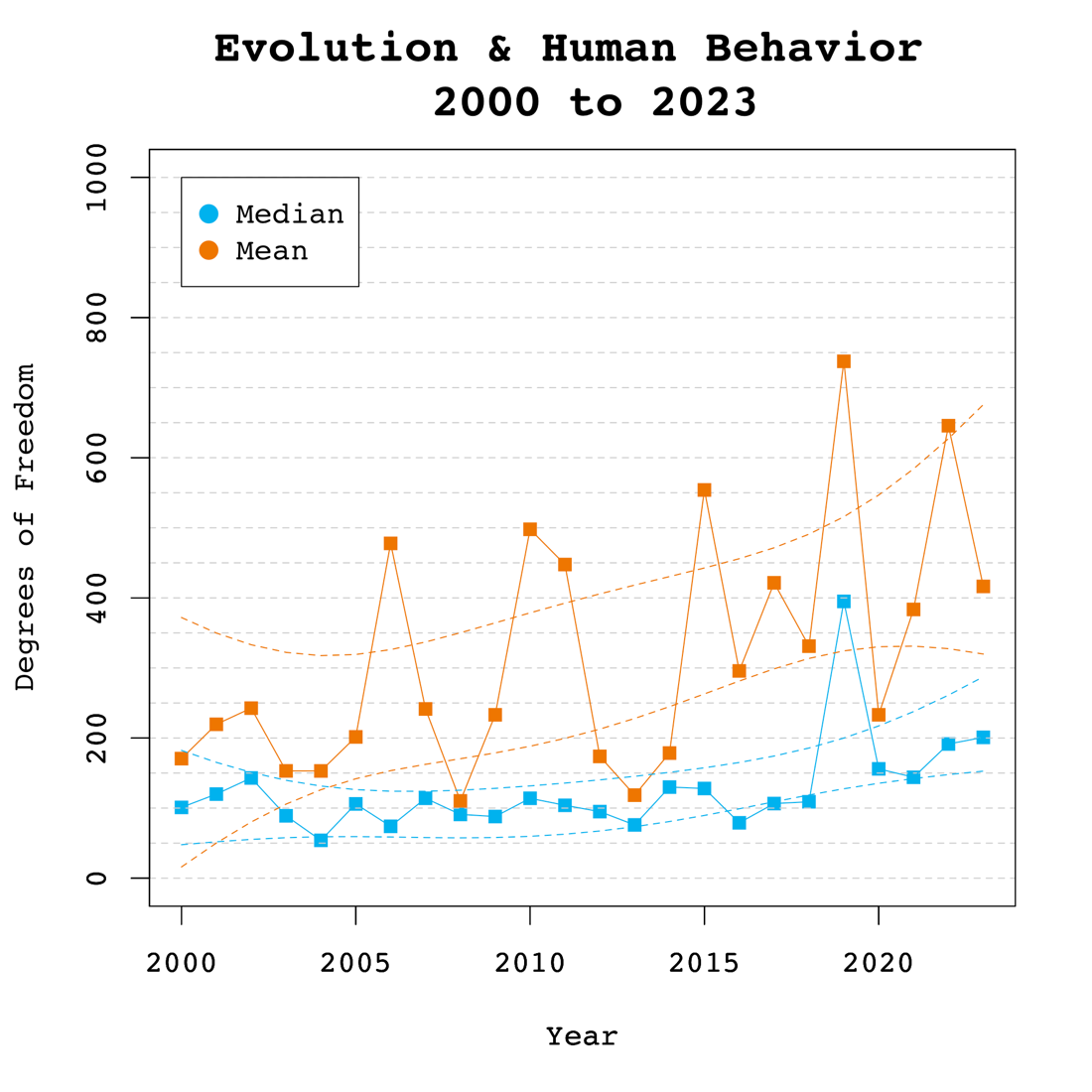
Figure 2 shows the median and mean degrees of freedom used in F-tests and t-tests reported in Evolution & Human Behavior. The mean results are highly variable due to a few studies with extremely large sampel sizes. Thus, we focus on the median to examine time trends. The median degrees of freedom over time was 107.75, ranging from 54 to 395. Regression analyses of the median showed a significant linear increase by 4 to 5 degrees of freedom per year, b = 4.57, SE = 1.69, p = 0.013. However, there was no evidence that the replication crisis influenced a significant increase in sample sizes as seen by the lack of a significant non-linear trend and a small regression coefficient, b = 0.50, SE = 0.27, p = 0.082.

Figure 2

Observed and Expected Discovery Rates

Figure 3 shows the changes in the ODR and EDR estimates over time. There were no significant linear, b = 0.06 (SE = 0.17 p = 0.748) or non-linear,  b = -0.02 (SE = 0.03, p = 0.435) trends observed in the ODR estimate. The regression results for the EDR estimate showed no significant linear, b = 0.75 (SE = 0.51 p = 0.153) or non-linear, b = 0.04 (SE = 0.08 p = 0.630) changes over time. These findings indicate the journal has not increased its publication of non-significant results even though selection bias is heavily present. Furthermore, the lack of changes to the EDR suggests that many studies continue to be statistically underpowered to measure the effect sizes of interest.

Figure 3

Expected Replicability Rates and False Discovery Risks

Figure 4 depicts the false discovery risk (FDR) and the Estimated Replication Rate (ERR). It also shows the Expected Replication Failure rate (EFR = 1 – ERR). A comparison of the EFR with the FDR provides information for the interpretation of replication failures. If the FDR is close to the EFR, many replication failures may be due to false positive results in original studies. In contrast, if the FDR is low, most replication failures will likely be false negative results in underpowered replication studies.

The ERR estimate showed a significant linear increase over time, b = 0.61, SE = 0.26, p = 0.031. No significant non-linear trend was observed, b = 0.07, SE = 0.4, p = 0.127. These findings are consistent with the observed significant increase in sample sizes as the reduction in sampling error increases the likelihood that an effect will replicate.

The significant increase in the ERR without a significant increase in the EDR is partially explained by the higher power of the test for the ERR that can be estimated with higher precision. However, it is also possible that the ERR increases more because there is an increase in the heterogeneity of studies. That is, the number of studies with low power has remained constant, but the number of studies with high power has increased. This would result in a bigger increase in the ERR than the EDR.

Figure 4

Visual inspection of Figure 4 depicts the EFR higher than the FDR over time, suggesting that replication failures of studies in Evolution & Human Behavior are more likely to be false negatives rather than false positives. Up to 30% of the published results might not be replicable, and up to 50% of those results may be false positives.

It is noteworthy that the gap between the EFR and the FDR appears to be narrowing over time. This trend is supported by the significant increase in the Estimated Replicability Rate (ERR), where EFR is defined as 1 – ERR. Meanwhile, the Expected Discovery Rate (EDR) has remained constant, indicating that the FDR has also remained unchanged, given that the FDR is derived from a transformation of the EDR. The findings suggest that while original results have become more likely to replicate, the probability that replication failures are false positives remains unchanged.   

Adjusting Alpha

A simple solution to a crisis of confidence in published results is to adjust the criterion to reject the null-hypothesis. For example, some researchers have proposed to set alpha to .005 to avoid too many false positive results. With z-curve we can calibrate alpha to keep the false discovery risk at an acceptable level without discarding too many true positive results. To do so, we set alpha to .05, .01, .005, and .001 and examined the false discovery risk.

Figure 5

Figure 5 shows that the conventional criterion of p < .05 produces false discovery risks above 5%. The high variability in annual estimates also makes it difficult to provide precise estimates of the FDR. However, adjusting alpha to .01 is sufficient to produce an FDR with tight confidence intervals below 5%. The benefits of reducing alpha further to .005 or .001 are minimal.

Figure 6

Figure 6 shows the impact of lowering the significance criterion, alpha, on the discovery rate (lower alpha implies fewer significant results). In Evolution & Human Behavior lowering alpha to .01 reduces the observed discovery rate by about 20 percentage points. This implies that 20% of results reported p-values between .05 and .01. These results often have low success rates in actual replication studies (OSC, 2015). Thus, our recommendation is to set alpha to .01 to reduce the false positive risk to 5% and to disregard studies with weak evidence against the null-hypothesis. These studies require actual successful replications with larger samples to provide credible evidence for an evolutionary hypothesis.

There are relatively few studies with p-values between .01 and .005. Thus, more conservative researchers can use alpha = .005 without losing too many additional results.

Limitations

The main limitation of these results is the use of automatically extracted test statistics. This approach cannot distinguish between theoretically important statistical results and other results that are often reported but do not test focal hypotheses (e.g., testing the statistical significance of a manipulation check, reporting a non-significant result for a factor in a complex statistical design that was not expected to produce a significant result).

To examine the influence of automatic extraction on our results, we can compare the results to hand-coding results of over 4,000 hand-coded focal hypotheses in over 40 journals in 2010 and 2020. The ODR was 90% around 2010 and 88% around 2020. Thus, the tendency to report significant results for focal hypothesis tests is even higher than the ODR for all results and there is no indication that this bias has decreased notably over time. The ERR increased a bit from 61% to 67%, but these values are a bit lower than those reported here. Thus, it is possible that focal tests also have lower average power than other tests, but this difference seems to be small. The main finding is that publishing of non-significant results for focal tests remains an exception in psychology journals and probably also in this journal.

One concern about the publication of our results is that it merely creates a new criterion to game publications. Rather than trying to get p-values below .05, researchers may use tricks to get p-values below .01. However, this argument ignores that it becomes increasingly harder to produce lower p-values with tricks (Simmons et al., 2011). Moreover, z-curve analysis makes it easy to see selection bias for different levels of significance. Thus, a more plausible response to these results is that researchers will increase sample sizes or use other methods to reduce sampling error to increase power.

Conclusion

The replicability report for Evolution & Human Behavior suggests that the power to obtain a significant result to report a significant result (i.e., a discovery) ranges from 28% to 71%. This finding suggests that many studies are underpowered and require luck to get a significant result. The false positive risk is modest and can be controlled by setting alpha to .01. Replication attempts of original findings with p-values above .01 should increase sample sizes to produce more conclusive evidence. The journal shows clear evidence of selection bias.

There are several ways, the current or future editors of this journal can improve credibility of results published in this journal. First, results with weak evidence (p-values between .05 and .01) should only be reported as suggestive results that require replication or even request a replication before publication. Second, editors should try to reduce publication bias by prioritizing research questions over results. A well-conducted study with an important question should be published even if the results are not statistically significant. Pre-registration and registered reports can help to reduce publication bias. Editors may also ask for follow-up studies with higher power to follow up on a non-significant result.

Publication bias also implies that point estimates of effect sizes are inflated. It is therefore important to take uncertainty in this estimates into account. Small samples with large sampling error are usually unable to provide meaningful information about effect sizes and conclusions should be limited to the direct of an effect.

The present results serve as a benchmark for future years to track progress in this journal to ensure trust in research by evolutionary psychologists.

Replicability of Research in Frontiers of Psychology

Summary

The z-curve analysis of results in this journal shows (a) that many published results are based on studies with low to modest power, (b) selection for significance inflates effect size estimates and the discovery rate of reported results, and (c) there is no evidence that research practices have changed over the past decade. Readers should be careful when they interpret results and recognize that reported effect sizes are likely to overestimate real effect sizes, and that replication studies with the same sample size may fail to produce a significant result again. To avoid misleading inferences, I suggest using alpha = .005 as a criterion for valid rejections of the null-hypothesis. Using this criterion, the risk of a false positive result is below 2%. I also recommend computing a 99% confidence interval rather than the traditional 95% confidence interval for the interpretation of effect size estimates.

Given the low power of many studies, readers also need to avoid the fallacy to report non-significant results as evidence for the absence of an effect. With 50% power, the results can easily switch in a replication study so that a significant result becomes non-significant and a non-significant result becomes significant. However, selection for significance will make it more likely that significant results become non-significant than observing a change in the opposite direction.

The average power of studies in a heterogeneous journal like Frontiers of Psychology provides only circumstantial evidence for the evaluation of results. When other information is available (e.g., z-curve analysis of a discipline, author, or topic, it may be more appropriate to use this information).

Report

Frontiers of Psychology was created in 2010 as a new online-only journal for psychology. It covers many different areas of psychology, although some areas have specialized Frontiers journals like Frontiers in Behavioral Neuroscience.

The business model of Frontiers journals relies on publishing fees of authors, while published articles are freely available to readers.

The number of articles in Frontiers of Psychology has increased quickly from 131 articles in 2010 to 8,072 articles in 2022 (source Web of Science). With over 8,000 published articles Frontiers of Psychology is an important outlet for psychological researchers to publish their work. Many specialized, print-journals publish fewer than 100 articles a year. Thus, Frontiers of Psychology offers a broad and large sample of psychological research that is equivalent to a composite of 80 or more specialized journals.

Another advantage of Frontiers of Psychology is that it has a relatively low rejection rate compared to specialized journals that have limited journal space. While high rejection rates may allow journals to prioritize exceptionally good research, articles published in Frontiers of Psychology are more likely to reflect the common research practices of psychologists.

To examine the replicability of research published in Frontiers of Psychology, I downloaded all published articles as PDF files, converted PDF files to text files, and extracted test-statistics (F, t, and z-tests) from published articles. Although this method does not capture all published results, there is no a priori reason that results reported in this format differ from other results. More importantly, changes in research practices such as higher power due to larger samples would be reflected in all statistical tests.

As Frontiers of Psychology only started shortly before the replication crisis in psychology increased awareness about the problem of low statistical power and selection for significance (publication bias), I was not able to examine replicability before 2011. I also found little evidence of changes in the years from 2010 to 2015. Therefore, I use this time period as the starting point and benchmark for future years.
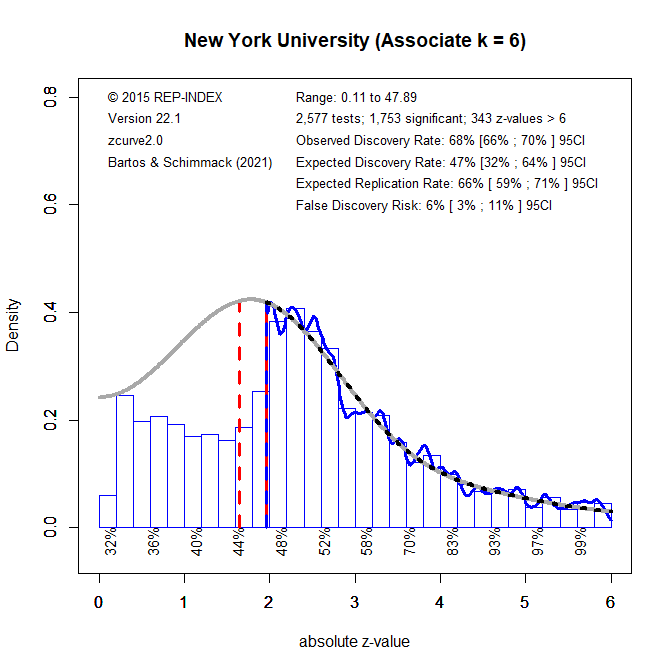
Figure 1 shows a z-curve plot of results published from 2010 to 2014. All test-statistics are converted into z-scores. Z-scores greater than 1.96 (the solid red line) are statistically significant at alpha = .05 (two-sided) and typically used to claim a discovery (rejection of the null-hypothesis). Sometimes even z-scores between 1.65 (the dotted red line) and 1.96 are used to reject the null-hypothesis either as a one-sided test or as marginal significance. Using alpha = .05, the plot shows 71% significant results, which is called the observed discovery rate (ODR).
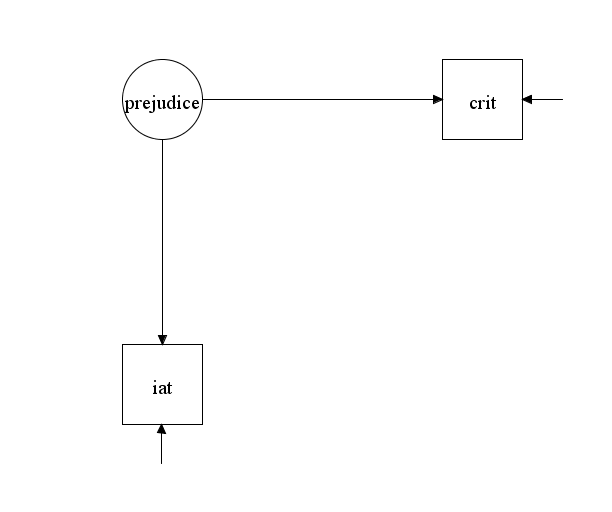
Visual inspection of the plot shows a peak of the distribution right at the significance criterion. It also shows that z-scores drop sharply on the left side of the peak when the results do not reach the criterion for significance. This wonky distribution cannot be explained with sampling error. Rather it shows a selective bias to publish significant results by means of questionable practices such as not reporting failed replication studies or inflating effect sizes by means of statistical tricks. To quantify the amount of selection bias, z-curve fits a model to the distribution of significant results and estimates the distribution of non-significant (i.e., the grey curve in the range of non-significant results). The discrepancy between the observed distribution and the expected distribution shows the file-drawer of missing non-significant results. Z-curve estimates that the reported significant results are only 31% of the estimated distribution. This is called the expected discovery rate (EDR). Thus, there are more than twice as many significant results as the statistical power of studies justifies (71% vs. 31%). Confidence intervals around these estimates show that the discrepancy is not just due to chance, but active selection for significance.

Using a formula developed by Soric (1989), it is possible to estimate the false discovery risk (FDR). That is, the probability that a significant result was obtained without a real effect (a type-I error). The estimated FDR is 12%. This may not be alarming, but the risk varies as a function of the strength of evidence (the magnitude of the z-score). Z-scores that correspond to p-values close to p =.05 have a higher false positive risk and large z-scores have a smaller false positive risk. Moreover, even true results are unlikely to replicate when significance was obtained with inflated effect sizes. The most optimistic estimate of replicability is the expected replication rate (ERR) of 69%. This estimate, however, assumes that a study can be replicated exactly, including the same sample size. Actual replication rates are often lower than the ERR and tend to fall between the EDR and ERR. Thus, the predicted replication rate is around 50%. This is slightly higher than the replication rate in the Open Science Collaboration replication of 100 studies which was 37%.

Figure 2 examines how things have changed in the next five years.

The observed discovery rate decreased slightly, but statistically significantly, from 71% to 66%. This shows that researchers reported more non-significant results. The expected discovery rate increased from 31% to 40%, but the overlapping confidence intervals imply that this is not a statistically significant increase at the alpha = .01 level. (if two 95%CI do not overlap, the difference is significant at around alpha = .01). Although smaller, the difference between the ODR of 60% and the EDR of 40% is statistically significant and shows that selection for significance continues. The ERR estimate did not change, indicating that significant results are not obtained with more power. Overall, these results show only modest improvements, suggesting that most researchers who publish in Frontiers in Psychology continue to conduct research in the same way as they did before, despite ample discussions about the need for methodological reforms such as a priori power analysis and reporting of non-significant results.

The results for 2020 show that the increase in the EDR was a statistical fluke rather than a trend. The EDR returned to the level of 2010-2015 (29% vs. 31), but the ODR remained lower than in the beginning, showing slightly more reporting of non-significant results. The size of the file drawer remains large with an ODR of 66% and an EDR of 72%.

The EDR results for 2021 look again better, but the difference to 2020 is not statistically significant. Moreover, the results in 2022 show a lower EDR that matches the EDR in the beginning.

Overall, these results show that results published in Frontiers in Psychology are selected for significance. While the observed discovery rate is in the upper 60%s, the expected discovery rate is around 35%. Thus, the ODR is nearly twice the rate of the power of studies to produce these results. Most concerning is that a decade of meta-psychological discussions about research practices has not produced any notable changes in the amount of selection bias or the power of studies to produce replicable results.

How should readers of Frontiers in Psychology articles deal with this evidence that some published results were obtained with low power and inflated effect sizes that will not replicate? One solution is to retrospectively change the significance criterion. Comparisons of the evidence in original studies and replication outcomes suggest that studies with a p-value below .005 tend to replicate at a rate of 80%, whereas studies with just significant p-values (.050 to .005) replicate at a much lower rate (Schimmack, 2022). Demanding stronger evidence also reduces the false positive risk. This is illustrated in the last figure that uses results from all years, given the lack of any time trend.

In the Figure the red solid line moved to z = 2.8; the value that corresponds to p = .005, two-sided. Using this more stringent criterion for significance, only 45% of the z-scores are significant. Another 25% were significant with alpha = .05, but are no longer significant with alpha = .005. As power decreases when alpha is set to more stringent, lower, levels, the EDR is also reduced to only 21%. Thus, there is still selection for significance. However, the more effective significance filter also selects for more studies with high power and the ERR remains at 72%, even with alpha = .005 for the replication study. If the replication study used the traditional alpha level of .05, the ERR would be even higher, which explains the finding that the actual replication rate for studies with p < .005 is about 80%.

The lower alpha also reduces the risk of false positive results, even though the EDR is reduced. The FDR is only 2%. Thus, the null-hypothesis is unlikely to be true. The caveat is that the standard null-hypothesis in psychology is the nil-hypothesis and that the population effect size might be too small to be of practical significance. Thus, readers who interpret results with p-values below .005 should also evaluate the confidence interval around the reported effect size, using the more conservative 99% confidence interval that correspondence to alpha = .005 rather than the traditional 95% confidence interval. In many cases, this confidence interval is likely to be wide and provide insufficient information about the strength of an effect.

2021 Replicability Report for the Psychology Department at New York University

Introduction

Since 2011, it is an open secret that many published results in psychology journals do not replicate. The replicability of published results is particularly low in social psychology (Open Science Collaboration, 2015).

A key reason for low replicability is that researchers are rewarded for publishing as many articles as possible without concerns about the replicability of the published findings. This incentive structure is maintained by journal editors, review panels of granting agencies, and hiring and promotion committees at universities.

To change the incentive structure, I developed the Replicability Index, a blog that critically examined the replicability, credibility, and integrity of psychological science. In 2016, I created the first replicability rankings of psychology departments (Schimmack, 2016). Based on scientific criticisms of these methods, I have improved the selection process of articles to be used in departmental reviews.

1. I am using Web of Science to obtain lists of published articles from individual authors (Schimmack, 2022). This method minimizes the chance that articles that do not belong to an author are included in a replicability analysis. It also allows me to classify researchers into areas based on the frequency of publications in specialized journals. Currently, I cannot evaluate neuroscience research. So, the rankings are limited to cognitive, social, developmental, clinical, and applied psychologists.

2. I am using department’s websites to identify researchers that belong to the psychology department. This eliminates articles that are from other departments.

3. I am only using tenured, active professors. This eliminates emeritus professors from the evaluation of departments. I am not including assistant professors because the published results might negatively impact their chances to get tenure. Another reason is that they often do not have enough publications at their current university to produce meaningful results.

Like all empirical research, the present results rely on a number of assumptions and have some limitations. The main limitations are that
(a) only results that were found in an automatic search are included
(b) only results published in 120 journals are included (see list of journals)
(c) published significant results (p < .05) may not be a representative sample of all significant results
(d) point estimates are imprecise and can vary based on sampling error alone.

These limitations do not invalidate the results. Large difference in replicability estimates are likely to predict real differences in success rates of actual replication studies (Schimmack, 2022).

New York University

I used the department website to find core members of the psychology department. I found 13 professors and 6 associate professors. Figure 1 shows the z-curve for all 12,365 tests statistics in articles published by these 19 faculty members. I use the Figure to explain how a z-curve analysis provides information about replicability and other useful meta-statistics.

1. All test-statistics are converted into absolute z-scores as a common metric of the strength of evidence (effect size over sampling error) against the null-hypothesis (typically H0 = no effect). A z-curve plot is a histogram of absolute z-scores in the range from 0 to 6. The 1,239 (~ 10%) of z-scores greater than 6 are not shown because z-scores of this magnitude are extremely unlikely to occur when the null-hypothesis is true (particle physics uses z > 5 for significance). Although they are not shown, they are included in the meta-statistics.

2. Visual inspection of the histogram shows a steep drop in frequencies at z = 1.96 (dashed blue/red line) that corresponds to the standard criterion for statistical significance, p = .05 (two-tailed). This shows that published results are selected for significance. The dashed red/white line shows significance for p < .10, which is often used for marginal significance. There is another drop around this level of significance.

3. To quantify the amount of selection bias, z-curve fits a statistical model to the distribution of statistically significant results (z > 1.96). The grey curve shows the predicted values for the observed significant results and the unobserved non-significant results. The full grey curve is not shown to present a clear picture of the observed distribution. The statistically significant results (including z > 6) make up 20% of the total area under the grey curve. This is called the expected discovery rate because the results provide an estimate of the percentage of significant results that researchers actually obtain in their statistical analyses. In comparison, the percentage of significant results (including z > 6) includes 70% of the published results. This percentage is called the observed discovery rate, which is the rate of significant results in published journal articles. The difference between a 70% ODR and a 20% EDR provides an estimate of the extent of selection for significance. The difference of 50 percentage points is large. The upper level of the 95% confidence interval for the EDR is 28%. Thus, the discrepancy is not just random. To put this result in context, it is possible to compare it to the average for 120 psychology journals in 2010 (Schimmack, 2022). The ODR is similar (70 vs. 72%), but the EDR is a bit lower (20% vs. 28%), although the difference might be largely due to chance.

4. The EDR can be used to estimate the risk that published results are false positives (i.e., a statistically significant result when H0 is true), using Soric’s (1989) formula for the maximum false discovery rate. An EDR of 20% implies that no more than 20% of the significant results are false positives, however the upper limit of the 95%CI of the EDR, 28%, allows for 36% false positive results. Most readers are likely to agree that this is an unacceptably high risk that published results are false positives. One solution to this problem is to lower the conventional criterion for statistical significance (Benjamin et al., 2017). Figure 2 shows that alpha = .005 reduces the point estimate of the FDR to 3% with an upper limit of the 95% confidence interval of XX%. Thus, without any further information readers could use this criterion to interpret results published by NYU faculty members.

5. The estimated replication rate is based on the mean power of significant studies (Brunner & Schimmack, 2020). Under ideal condition, mean power is a predictor of the success rate in exact replication studies with the same sample sizes as the original studies. However, as NYU professor van Bavel pointed out in an article, replication studies are never exact, especially in social psychology (van Bavel et al., 2016). This implies that actual replication studies have a lower probability of producing a significant result, especially if selection for significance is large. In the worst case scenario, replication studies are not more powerful than original studies before selection for significance. Thus, the EDR provides an estimate of the worst possible success rate in actual replication studies. In the absence of further information, I have proposed to use the average of the EDR and ERR as a predictor of actual replication outcomes. With an ERR of 62% and an EDR of 20%, this implies an actual replication prediction of 41%. This is close to the actual replication rate in the Open Science Reproducibility Project (Open Science Collaboration, 2015). The prediction for results published in 120 journals in 2010 was (ERR = 67% + ERR = 28%)/ 2 = 48%. This suggests that results published by NYU faculty are slightly less replicable than the average result published in psychology journals, but the difference is relatively small and might be mostly due to chance.

6. There are two reasons for low replication rates in psychology. One possibility is that psychologists test many false hypotheses (i.e., H0 is true) and many false positive results are published. False positive results have a very low chance of replicating in actual replication studies (i.e. 5% when .05 is used to reject H0), and will lower the rate of actual replications a lot. Alternative, it is possible that psychologists tests true hypotheses (H0 is false), but with low statistical power (Cohen, 1961). It is difficult to distinguish between these two explanations because the actual rate of false positive results is unknown. However, it is possible to estimate the typical power of true hypotheses tests using Soric’s FDR. If 20% of the significant results are false positives, the power of the 80% true positives has to be (.62 – .2*.05)/.8 = 76%. This would be close to Cohen’s recommended level of 80%, but with a high level of false positive results. Alternatively, the null-hypothesis may never be really true. In this case, the ERR is an estimate of the average power to get a significant result for a true hypothesis. Thus, power is estimated to be between 62% and 76%. The main problem is that this is an average and that many studies have less power. This can be seen in Figure 1 by examining the local power estimates for different levels of z-scores. For z-scores between 2 and 2.5, the ERR is only 47%. Thus, many studies are underpowered and have a low probability of a successful replication with the same sample size even if they showed a true effect.

Area

The results in Figure 1 provide highly aggregated information about replicability of research published by NYU faculty. The following analyses examine potential moderators. First, I examined social and cognitive research. Other areas were too small to be analyzed individually.

The z-curve for the 11 social psychologists was similar to the z-curve in Figure 1 because they provided more test statistics and had a stronger influence on the overall result.

The z-curve for the 6 cognitive psychologists looks different. The EDR and ERR are higher for cognitive psychology, and the 95%CI for social and cognitive psychology do not overlap. This suggests systematic differences between the two fields. These results are consistent with other comparisons of the two fields, including actual replication outcomes (OSC, 2015). With an EDR of 44%, the false discovery risk for cognitive psychology is only 7% with an upper limit of the 95%CI at 12%. This suggests that the conventional criterion of .05 does keep the false positive risk at a reasonably low level or that an adjustment to alpha = .01 is sufficient. In sum, the results show that results published by cognitive researchers at NYU are more replicable than those published by social psychologists.

Position

Since 2015 research practices in some areas of psychology, especially social psychology, have changed to increase replicability. This would imply that research by younger researchers is more replicable than research by more senior researchers that have more publications before 2015. A generation effect would also imply that a department’s replicability increases when older faculty members retire. On the other hand, associate professors are relatively young and likely to influence the reputation of a department for a long time.

The figure above shows that most test statistics come from the (k = 13) professors. As a result, the z-curve looks similar to the z-curve for all test values in Figure 1. The results for the 6 associate professors (below) are more interesting. Although five of the six associate professors are in the social area, the z-curve results show a higher EDR and less selection bias than the plot for all social psychologists. This suggests that the department will improve when full professors in social psychology retire.

Some researchers have changed research practices in response to the replication crisis. It is therefore interesting to examine whether replicability of newer research has improved. To examine this question, I performed a z-curve analysis for articles published in the past five year (2016-2021).

The results show very little signs of improvement. The EDR increased from 20% to 26%, but the confidence intervals are too wide to infer that this is a systematic change. In contrast, Stanford University improved from 22% to 50%, a significant increase. For now, NYU results should be interpreted with alpha = .005 as threshold for significance to maintain a reasonable false positive risk.

The table below shows the meta-statistics of all 19 faculty members. You can see the z-curve for each faculty member by clicking on their name.

Rank  NameARPEDRERRFDR
1Karen E. Adolph6676564
2Bob Rehder6175476
3Marjorie Rhodes5868486
4Jay J. van Bavel5566447
5Brian McElree5459496
6David M. Amodio5365408
7Todd M. Gureckis49752317
8Emily Balcetis48682813
9Eric D. Knowles48603510
10Tessa V. West4655379
11Catherine A. Hartley45701923
12Madeline E. Heilman44662318
13John T. Jost44622615
14Andrei Cimpian42642021
15Peter M. Gollwitzer36541825
16Yaacov Trope34541432
17Gabriele Oettingen30461432
18Susan M. Andersen30471335

Reevaluating the Predictive Validity of the Race Implicit Association Test

Over the past two decades, social psychological research on prejudice has been dominated by the implicit cognition paradigm (Meissner, Grigutsch, Koranyi, Müller, & Rothermund, 2019). This paradigm is based on the assumption that many individuals of the majority group (e.g., White US Americans) have an automatic tendency to discriminate against members of a stigmatized minority group (e.g., African Americans). It is assumed that this tendency is difficult to control because many people are unaware of their prejudices.

The implicit cognition paradigm also assumes that biases vary across individuals of the majority group. The most widely used measure of individual differences in implicit biases is the race Implicit Association Test (rIAT; Greenwald, McGhee, & Schwartz, 1998). Like any other measure of individual differences, the race IAT has to meet psychometric criteria to be a useful measure of implicit bias. Unfortunately, the race IAT has been used in hundreds of studies before its psychometric properties were properly evaluated in a program of validation research (Schimmack, 2021a, 2021b).

Meta-analytic reviews of the literature suggest that the race IAT is not as useful for the study of prejudice as it was promised to be (Greenwald et al., 1998). For example, Meissner et al. (2019) concluded that “the predictive value for behavioral criteria is weak and their incremental validity over and above self-report measures is negligible” (p. 1).

In response to criticism of the race IAT, Greenwald, Banaji, and Nosek (2015) argued that “statistically small effects of the implicit association test can have societally large effects” (p. 553). At the same time, Greenwald (1975) warned psychologists that they may be prejudiced against the null-hypothesis. To avoid this bias, he proposed that researchers should define a priori a range of effect sizes that are close enough to zero to decide in favor of the null-hypothesis. Unfortunately, Greenwald did not follow his own advice and a clear criterion for a small, but practically significant amount of predictive validity is lacking. This is a problem because estimates have decreased over time from r = .39 (McConnell & Leibold, 2001), to r = .24 in 2009 ( Greenwald, Poehlman, Uhlmann, and Banaji, 2009), to r = .148 in 2013 (Oswald, Mitchell, Blanton, Jaccard, & Tetlock (2013), and r = .097 in 2019 (Greenwald & Lai, 2020; Kurdi et al., 2019). Without a clear criterion value, it is not clear how this new estimate of predictive validity should be interpreted. Does it still provide evidence for a small, but practically significant effect, or does it provide evidence for the null-hypothesis (Greenwald, 1975)?

Measures are not Causes

To justify the interpretation of a correlation of r = .1 as small but important, it is important to revisit Greenwald et al.’s (2015) arguments for this claim. Greenwald et al. (2015) interpret this correlation as evidence for an effect of the race IAT on behavior. For example, they write “small effects can produce substantial discriminatory impact also by cumulating over repeated occurrences to the same person” (p. 558). The problem with this causal interpretation of a correlation between two measures is that scores on the race IAT have no influence on individuals’ behavior. This simple fact is illustrated in Figure 1. Figure 1 is a causal model that assumes the race IAT reflects valid variance in prejudice and prejudice influences actual behaviors (e.g., not voting for a Black political candidate). The model makes it clear that the correlation between scores on the race IAT (i.e., the iat box) and scores on a behavioral measures (i.e., the crit box) do not have a causal link (i.e., no path leads from the iat box to the crit box). Rather, the two measured variables are correlated because they both reflect the effect of a third variable. That is, prejudice influences race IAT scores and prejudice influences the variance in the criterion variable.

There is general consensus among social scientists that prejudice is a problem and that individual differences in prejudice have important consequences for individuals and society. The effect size of prejudice on a single behavior has not been clearly examined, but to the extent that race IAT scores are not perfectly valid measures of prejudice, the simple correlation of r = .1 is a lower limit of the effect size. Schimmack (2021) estimated that no more than 20% of the variance in race IAT scores is valid variance. With this validity coefficient, a correlation of r = .1 implies an effect of prejudice on actual behaviors of .1 / sqrt(.2) = .22.

Greenwald et al. (2015) correctly point out that effect sizes of this magnitude, r ~ .2, can have practical, real-world implications. The real question, however, is whether predictive validity of .1 justifies the use of the race IAT as a measure of prejudice. This question has to be evaluated in a comparison of predictive validity for the race IAT with other measures of prejudice. Thus, the real question is whether the race IAT has sufficient incremental predictive validity over other measures of prejudice. However, this question has been largely ignored in the debate about the utility of the race IAT (Greenwald & Lai, 2020; Greenwald et al., 2015; Oswald et al., 2013).

Kurdi et al. (2019) discuss incremental predictive validity, but this discussion is not limited to the race IAT and makes the mistake to correct for random measurement error. As a result, the incremental predictive validity for IATs of b = .14 is a hypothetical estimate for IATs that are perfectly reliable. However, it is well-known that IATs are far from perfectly reliable. Thus, this estimate overestimates the incremental predictive validity. Using Kurdi et al.’s data and limiting the analysis to studies with the race IAT, I estimated incremental predictive validity to be b = .08, 95%CI = .04 to .12. It is difficult to argue that this a practically significant amount of incremental predictive validity. At the very least, it does not justify the reliance on the race IAT as the only measure of prejudice or the claim that the race IAT is a superior measure of prejudice (Greenwald et al., 2009).

The meta-analytic estimate of b = .1 has to be interpreted in the context of evidence of substantial heterogeneity across studies (Kurdi et al., 2019). Kurdi et al. (2019) suggest that “it may be more appropriate to ask under what conditions the two [race IAT scores and criterion variables] are more or less highly correlated” (p. 575). However, little progress has been made in uncovering moderators of predictive validity. One possible explanation for this is that previous meta-analysis may have overlooked one important source of variation in effect sizes, namely publication bias. Traditional meta-analyses may be unable to reveal publication bias because they include many articles and outcome measures that did not focus on predictive validity. For example, Kurdi’s meta-analysis included a study by Luo, Li, Ma, Zhang, Rao, and Han (2015). The main focus of this study was to examine the potential moderating influence of oxytocin on neurological responses to pain expressions of Asian and White faces. Like many neurological studies, the sample size was small (N = 32), but the study reported 16 brain measures. For the meta-analysis, correlations were computed across N = 16 participants separately for two experimental conditions. Thus, this study provided as many effect sizes as it had participants. Evidently, power to obtain a significant result with N = 16 and r = .1 is extremely low, and adding these 32 effect sizes to the meta-analysis merely introduced noise. This may undermine the validity of meta-analytic results ((Sharpe, 1997). To address this concern, I conducted a new meta-analysis that differs from the traditional meta-analyses. Rather than coding as many effects from as many studies as possible, I only include focal hypothesis tests from studies that aimed to investigate predictive validity. I call this a focused meta-analysis.

Focused Meta-Analysis of Predictive Validity

Coding of Studies

I relied on Kurdi et al.’s meta-analysis to find articles. I selected only published articles that used the race IAT (k = 96). The main purpose of including unpublished studies is often to correct for publication bias (Kurdi et al., 2019). However, it is unlikely that only 14 (8%) studies that were conducted remained unpublished. Thus, the unpublished studies are not representative and may distort effect size estimates.

Coding of articles in terms of outcome measures that reflect discrimination yielded 60 studies in 45 articles. I examined whether this selection of studies influenced the results by limiting a meta-analysis with Kurdi et al.’s coding of studies to these 60 articles. The weighted average effect size was larger than the reported effect size, a = .167, se = .022, 95%CI = .121 to .212. Thus, Kurdi et al.’s inclusion of a wide range of studies with questionable criterion variables diluted the effect size estimate. However, there remained substantial variability around this effect size estimate using Kurdi et al.’s data, I2 = 55.43%.

Results

The focused coding produced one effect-size per study. It is therefore not necessary to model a nested structure of effect sizes and I used the widely used metafor package to analyze the data (Viechtbauer, 2010). The intercept-only model produced a similar estimate to the results for Kurdi et al.’s coding scheme, a = .201, se = .020, 95%CI = .171 to .249. Thus, focal coding does seem to produce the same effect size estimate as traditional coding. There was also a similar amount of heterogeneity in the effect sizes, I2 = 50.80%.

However, results for publication bias differed. Whereas Kurdi et al.’s coding shows no evidence of publication bias, focused coding produced a significant relationship emerged, b = 1.83, se = .41, z = 4.54, 95%CI = 1.03 to 2.64. The intercept was no longer significant, a = .014, se = .0462, z = 0.31, 95%CI = -.077 to 95%CI = .105. This would imply that the race IAT has no incremental predictive validity. Adding sampling error as a predictor reduced heterogeneity from I2 = 50.80% to 37.71%. Thus, some portion of the heterogeneity is explained by publication bias.

Stanley (2017) recommends to accept the null-hypothesis when the intercept in the previous model is not significant. However, a better criterion is to compare this model to other models. The most widely used alternative model regresses effect sizes on the squared sampling error (Stanley, 2017). This model explained more of the heterogeneity in effect sizes as reflected in a reduction of unexplained heterogeneity from 50.80% to 23.86%. The intercept for this model was significant, a = .113, se = .0232, z = 4.86, 95%CI = .067 to .158.

Figure 2 shows the effect sizes as a function of sampling error and the regression lines for the three models.

Inspection of Figure 1 provides further evidence that the squared-SE model. The red line (squared sampling error) fits the data better than the blue line (sampling error) model. In particular for large samples, PET underestimates effect sizes.

The significant relationship between sample size (sampling error) and effect sizes implies that large effects in small studies cannot be interpreted at face value. For example, the most highly cited study of predictive validity had only a sample size of N = 42 participants (McConnell & Leibold, 2001). The squared-sampling-error model predicts an effect size estimate of r = .30, which is close to the observed correlation of r = .39 in that study.

In sum, a focal meta-analysis replicates Kurdi et al.’s (2019) main finding that the average predictive validity of the race IAT is small, r ~ .1. However, the focal meta-analysis also produced a new finding. Whereas the initial meta-analysis suggested that effect sizes are highly variable, the new meta-analysis suggests that a large portion of this variability is explained by publication bias.

Moderator Analysis

I explored several potential moderator variables, namely (a) number of citations, (b) year of publication, (c) whether IAT effects were direct or moderator effects, (d) whether the correlation coefficient was reported or computed based on test statistics, and (e) whether the criterion was an actual behavior or an attitude measure. The only statistically significant result was a weaker correlation in studies that predicted a moderating effect of the race IAT, b = -.11, se = .05, z = 2.28, p = .032. However, the effect would not be significant after correction for multiple comparison and heterogeneity remained virtually unchanged, I2 = 27.15%.

During the coding of the studies, the article “Ironic effects of racial bias during interracial interactions” stood out because it reported a counter-intuitive result. in this study, Black confederates rated White participants with higher (pro-White) race IAT scores as friendlier. However, other studies find the opposite effect (e.g., McConnell & Leibold, 2001). If the ironic result was reported because it was statistically significant, it would be a selection effect that is not captured by the regression models and it would produce unexplained heterogeneity. I therefore also tested a model that excluded all negative effect. As bias is introduced by this selection, the model is not a test of publication bias, but it may be better able to correct for publication bias. The effect size estimate was very similar, a = .133, se = .017, 95%CI = .010 to .166. However, heterogeneity was reduced to 0%, suggesting that selection for significance fully explains heterogeneity in effect sizes.

In conclusion, moderator analysis did not find any meaningful moderators and heterogeneity was fully explained by publication bias, including publishing counterintuitive findings that suggest less discrimination by individuals with more prejudice. The finding that publication bias explains most of the variance is extremely important because Kurdi et al. (2019) suggested that heterogeneity is large and meaningful, which would suggest that higher predictive validity could be found in future studies. In contrast, the current results suggest that correlations greater than .2 in previous studies were largely due to selection for significance with small samples, which also explains unrealistically high correlations in neuroscience studies with the race IAT (cf. Schimmack, 2021b).

Predictive Validity of Self-Ratings

The predictive validity of self-ratings is important for several reasons. First, it provides a comparison standard for the predictive validity of the race IAT. For example, Greenwald et al. (2009) emphasized that predictive validity for the race IAT was higher than for self-reports. However, Kurdi et al.’s (2019) meta-analysis found the opposite. Another reason to examine the predictive validity of explicit measures is that implicit and explicit measures of racial attitudes are correlated with each other. Thus, it is important to establish the predictive validity of self-ratings to estimate the incremental predictive validity of the race IAT.

Figure 2 shows the results. The sampling-error model shows a non-zero effect size, but sampling error is large, and the confidence interval includes zero, a = .121, se = .117, 95%CI = -.107 to .350. Effect sizes are also extremely heterogeneous, I2 = 62.37%. The intercept for the squared-sampling-error model is significant, a = .176, se = .071, 95%CI = .036 to .316, but the model does not explain more of the heterogeneity in effect sizes than the squared-sampling-error model, I2 = 63.33%. To remain comparability, I use the squared-sampling error estimate. This confirms Kurdi et al.’s finding that self-ratings have slightly higher predictive validity, but the confidence intervals overlap. For any practical purposes, predictive validity of the race IAT and self-reports is similar. Repeating the moderator analyses that were conducted with the race IAT revealed no notable moderators.

Implicit-Explicit Correlations

Only 21 of the 60 studies reported information about the correlation between the race IAT and self-report measures. There was no indication of publication bias, and the effect size estimates of the three models converge on an estimate of r ~ .2 (Figure 3). Fortunately, this result can be compared with estimates from large internet studies (Axt, 2017) and a meta-analysis of implicit-explicit correlations (Hofmann et al., 2005). These estimates are a bit higher, r ~ .25. Thus, using an estimate of r = .2 is conservative for a test of the incremental predictive validity of the race IAT.

Incremental Predictive Validity

It is straightforward to estimate the incremental predictive validity of the race IAT and self-reports on the basis of the correlations between race IAT, self-ratings, and criterion variables. However, it is a bit more difficult to provide confidence intervals around these estimates. I used a simulated dataset with missing values to reproduce the correlations and sampling error of the meta-analysis. I then regressed, the criterion on the implicit and explicit variable. The incremental predictive validity for the race IAT was b = .07, se = .02, 95%CI = .03 to .12. This finding implies that the race IAT on average explains less than 1% unique variance in prejudice behavior. The incremental predictive validity of the explicit measure was b = .165, se = .03, 95%CI = .11 to .23. This finding suggests that explicit measures explain between 1 and 4 percent of the variance in prejudice behaviors.

Assuming that there is no shared method variance between implicit and explicit measures and criterion variables and that implicit and explicit measures reflect a common construct, prejudice, it is possible to fit a latent variable model to the correlations among the three indicators of prejudice (Schimmack, 2021). Figure 4 shows the model and the parameter estimates.

According to this model, prejudice has a moderate effect on behavior, b = .307, se = .043. This is consistent with general findings about effects of personality traits on behavior (Epstein, 1973; Funder & Ozer, 1983). The loading of the explicit variable on the prejudice factor implies that .582^2 = 34% of the variance in self-ratings of prejudice is valid variance. The loading of the implicit variable on the prejudice factor implies that .353^2 = 12% of the variance in race IAT scores is valid variance. Notably, similar estimates were obtained with structural equation models of data that are not included in this meta-analysis (Schimmack, 2021). Using data from Cunningham et al., (2001) I estimated .43^2 = 18% valid variance. Using Bar-Anan and Vianello (2018), I estimated .44^2 = 19% valid variance. Using data from Axt, I found .44^2 = 19% valid variance, but 8% of the variance could be attributed to group differences between African American and White participants. Thus, the present meta-analytic results are consistent with the conclusion that no more than 20% of the variance in race IAT scores reflects actual prejudice that can influence behavior.

In sum, incremental predictive validity of the race IAT is low for two reasons. First, prejudice has only modest effects on actual behavior in a specific situation. Second, only a small portion of the variance in race IAT scores is valid.

Discussion

In the 1990s, social psychologists embraced the idea that behavior is often influenced by processes that occur without conscious awareness. This assumption triggered the implicit revolution (Greenwald & Banaji, 2017). The implicit paradigm provided a simple explanation for low correlations between self-ratings of prejudice and implicit measures of prejudice, r ~ .2. Accordingly, many people are not aware how prejudice their unconscious is. The Implicit Association Test seemed to support this view because participants showed more prejudice on the IAT than on self-report measures. First studies of predictive validity also seemed to support this new model of prejudice (McConnell & Leibold, 2001), and the first meta-analysis suggested that implicit bias has a stronger influence on behavior than self-reported attitudes (Greenwald, Poehlman, Uhlmann, & Banaji, 2009, p. 17).

However, the following decade produced many findings that require a reevaluation of the evidence. Greenwald et al. (2009) published the largest test (N = 1057) of predictive validity. This study examined the ability of the race IAT to predict racial bias in the 2008 US presidential election. Although the race IAT was correlated with voting for McCain versus Obama, incremental predictive validity was close to zero and no longer significant when explicit measures were included in the regression model. Then subsequent meta-analyses produced lower estimates of predictive validity and it is no longer clear that predictive validity, especially incremental predictive validity, is high enough to reject the null-hypothesis. Although incremental predictive validity may vary across conditions, no conditions have been identified that show practically significant incremental predictive validity. Unfortunately, IAT proponents continue to make misleading statements based on single studies with small samples. For example, Kurdi et al. claimed that “effect sizes tend to be relatively large in studies on physician–patient interactions” (p. 583). However, this claim was based on a study with just 15 physicians, which makes it impossible to obtain precise effect size estimates about implicit bias effects for physicians.

Beyond Nil-Hypothesis Testing

Just like psychology in general, meta-analyses also suffer from the confusion of nil-hypothesis testing and null-hypothesis testing. The nil-hypothesis is the hypothesis that an effect size is exactly zero. Many methodologists have pointed out that it is rather silly to take the nil-hypothesis at face value because the true effect size is rarely zero (Cohen, 1994). The more important question is whether an effect size is sufficiently different from zero to be theoretically and practically meaningful. As pointed out by Greenwald (1975), effect size estimation has to be complemented with theoretical predictions about effect sizes. However, research on predictive validity of the race IAT lacks clear criteria to evaluate effect size estimates.

As noted in the introduction, there is agreement about the practical importance of statistically small effects for the prediction of discrimination and other prejudiced behaviors. The contentious question is whether the race IAT is a useful measure of dispositions to act prejudiced. Viewed from this perspective, focus on the race IAT is myopic. The real challenge is to develop and validate measures of prejudice. IAT proponents have often dismissed self-reports as invalid, but the actual evidence shows that self-reports have some validity that is at least equal to the validity of the race IAT. Moreover, even distinct self-report measures like the feeling thermometer and the symbolic racism have incremental predictive validity. Thus, prejudice researchers should use a multi-method approach. At present it is not clear that the race IAT can improve the measurement of prejudice (Greenwald et al., 2009; Schimmack, 2021a).

Methodological Implications

This article introduced a new type of meta-analysis. Rather than trying to find as many vaguely related studies and to code as many outcomes as possible, focused meta-analysis is limited to the main test of the key hypothesis. This approach has several advantages. First, the classic approach creates a large amount of heterogeneity that is unique to a few studies. This noise makes it harder to find real moderators. Second, the inclusion of vaguely related studies may dilute effect sizes. Third, the inclusion of non-focal studies may mask evidence of publication bias that is virtually present in all literatures. Finally, focal meta-analysis are much easier to do and can produce results much faster than the laborious meta-analyses that psychologists are used to. Even when classic meta-analysis exist, they often ignore publication bias. Thus, an important task for the future is to complement existing meta-analysis with focal meta-analysis to ensure that published effect sizes estimates are not diluted by irrelevant studies and not inflated by publication bias.

Prejudice Interventions

Enthusiasm about implicit biases has led to interventions that aim to reduce implicit biases. This focus on implicit biases in the real world needs to be reevaluated. First, there is no evidence that prejudice typically operates outside of awareness (Schimmack, 2021a). Second, individual differences in prejudice have only a modest impact on actual behaviors and are difficult to change. Not surprisingly, interventions that focus on implicit bias are not very infective. Rather than focusing on changing individuals’ dispositions, interventions may be more effective by changing situations. In this regard, the focus on internal factors is rather different from the general focus in social psychology on situational factors (Funder & Ozer, 1983). In recent years, it has become apparent that prejudice is often systemic. For example, police training may have a much stronger influence on racial disparities in fatal use of force than individual differences in prejudice of individual officers (Andersen, Di Nota, Boychuk, Schimmack, & Collins, 2021).

Conclusion

The present meta-analysis of the race IAT provides further support for Meissner et al.’s (2019) conclusion that IATs “predictive value for behavioral criteria is weak and their incremental validity over and above self-report measures is negligible” (p. 1). The present meta-analysis provides a quantitative estimate of b = .07. Although researchers can disagree about the importance of small effect sizes, I agree with Meissner that the gains from adding a race IAT to the measurement of prejudice is negligible. Rather than looking for specific contexts in which the race IAT has higher predictive validity, researchers should use a multi-method approach to measure prejudice. The race IAT may be included to further explore its validity, but there is no reason to rely on the race IAT as the single most important measure of individual differences in prejudice.

References

Funder, D.C., & Ozer, D.J. (1983). Behavior as a function of the situation. Journal of Personality and Social Psychology, 44, 107–112.

Kurdi, B., Seitchik, A. E., Axt, J. R., Carroll, T. J., Karapetyan, A., Kaushik, N., et al. (2019). Relationship between the implicit association test and intergroup behavior: a meta-analysis. American Psychologist. 74, 569–586. doi: 10.1037/amp0000364

Viechtbauer, W. (2010). Conducting meta-analyses in R with the metafor package. Journal of Statistical Software36(3), 1–48. https://www.jstatsoft.org/v036/i03.

Incidental Anchoring Bites the Dust

Update: 6/10/21

After I posted this post, I learned about a published meta-analysis and new studies of incidental anchoring by David Shanks and colleagues that came to the same conclusion (Shanks et al., 2020).

Introduction

“The most expensive car in the world costs $5 million. How much does a new BMW 530i cost?”

According to anchoring theory, information about the most expensive car can lead to higher estimates for the cost of a BMW. Anchoring effects have been demonstrated in many credible studies since the 1970s (Kahneman & Tversky, 1973).

A more controversial claim is that anchoring effects even occur when the numbers are unrelated to the question and presented incidentally (Criticher & Gilovich, 2008). In one study, participants saw a picture of a football player and were asked to guess how likely it is that the player will sack the football player in the next game. The player’s number on jersey was manipulated to be 54 or 94. The study produced a statistically significant result suggesting that a higher number makes people give higher likelihood judgments. This study started a small literature on incidental anchoring effects. A variation on this them are studies that presented numbers so briefly on a computer screen that most participants did not actually see the numbers. This is called subliminal priming. Allegedly, subliminal priming also produced anchoring effects (Mussweiler & Englich (2005).

Since 2011, many psychologists are skeptical whether statistically significant results in published articles can be trusted. The reason is that researchers only published results that supported their theoretical claims even when the claims were outlandish. For example, significant results also suggested that extraverts can foresee where pornographic images are displayed on a computer screen even before the computer randomly selected the location (Bem, 2011). No psychologist, except Bem, believes these findings. More problematic is that many other findings are equally incredible. A replication project found that only 25% of results in social psychology could be replicated (Open Science Collaboration, 2005). So, the question is whether incidental and subliminal anchoring are more like classic anchoring or more like extrasensory perception.

There are two ways to assess the credibility of published results when publication bias is present. One approach is to conduct credible replication studies that are published independent of the outcome of a study. The other approach is to conduct a meta-analysis of the published literature that corrects for publication bias. A recent article used both methods to examine whether incidental anchoring is a credible effect (Kvarven et al., 2020). In this article, the two approaches produced inconsistent results. The replication study produced a non-significant result with a tiny effect size, d = .04 (Klein et al., 2014). However, even with bias-correction, the meta-analysis suggested a significant, small to moderate effect size, d = .40.

Results

The data for the meta-analysis were obtained from an unpublished thesis (Henriksson, 2015). I suspected that the meta-analysis might have coded some studies incorrectly. Therefore, I conducted a new meta-analysis, using the same studies and one new study. The main difference between the two meta-analysis is that I coded studies based on the focal hypothesis test that was used to claim evidence for incidental anchoring. The p-values were then transformed into fisher-z transformed correlations and and sampling error, 1/sqrt(N – 3), based on the sample sizes of the studies.

Whereas the old meta-analysis suggested that there is no publication bias, the new meta-analysis showed a clear relationship between sampling error and effect sizes, b = 1.68, se = .56, z = 2.99, p = .003. Correcting for publication bias produced a non-significant intercept, b = .039, se = .058, z = 0.672, p = .502, suggesting that the real effect size is close to zero.

Figure 1 shows the regression line for this model in blue and the results from the replication study in green. We see that the blue and green lines intersect when sampling error is close to zero. As sampling error increases because sample sizes are smaller, the blue and green line diverge more and more. This shows that effect sizes in small samples are inflated by selection for significance.

However, there is some statistically significant variability in the effect sizes, I2 = 36.60%, p = .035. To further examine this heterogeneity, I conducted a z-curve analysis (Bartos & Schimmack, 2021; Brunner & Schimmack, 2020). A z-curve analysis converts p-values into z-statistics. The histogram of these z-statistics shows publication bias, when z-statistics cluster just above the significance criterion, z = 1.96.

Figure 2 shows a big pile of just significant results. As a result, the z-curve model predicts a large number of non-significant results that are absent. While the published articles have a 73% success rate, the observed discovery rate, the model estimates that the expected discovery rate is only 6%. That is, for every 100 tests of incidental anchoring, only 6 studies are expected to produce a significant result. To put this estimate in context, with alpha = .05, 5 studies are expected to be significant based on chance alone. The 95% confidence interval around this estimate includes 5% and is limited at 26% at the upper end. Thus, researchers who reported significant results did so based on studies with very low power and they needed luck or questionable research practices to get significant results.

A low discovery rate implies a high false positive risk. With an expected discovery rate of 6%, the false discovery risk is 76%. This is unacceptable. To reduce the false discovery risk, it is possible to lower the alpha criterion for significance. In this case, lowering alpha to .005 produces a false discovery risk of 5%. This leaves 5 studies that are significant.

One notable study with strong evidence, z = 3.70, examined anchoring effects for actual car sales. The data came from an actual auction of classic cars. The incidental anchors were the prices of the previous bid for a different vintage car. Based on sales data of 1,477 cars, the authors found a significant effect, b = .15, se = .04 that translates into a standardized effect size of d = .2 (fz = .087). Thus, while this study provides some evidence for incidental anchoring effects in one context, the effect size estimate is also consistent with the broader meta-analysis that effect sizes of incidental anchors are fairly small. Moreover, the incidental anchor in this study is still in the focus of attention and in some way related to the actual bid. Thus, weaker effects can be expected for anchors that are not related to the question at all (a player’s number) or anchors presented outside of awareness.

Conclusion

There is clear evidence that evidence for incidental anchoring cannot be trusted at face value. Consistent with research practices in general, studies on incidental and subliminal anchoring suffer from publication bias that undermines the credibility of the published results. Unbiased replication studies and meta-analysis suggest that incidental anchoring effects are either very small or zero. Thus, there exists currently no empirical support for the notion that irrelevant numeric information can bias numeric judgments. More research on anchoring effects that corrects for publication bias is needed.

Aber bitte ohne Sanna

Abstract

Social psychologists have failed to clean up their act and their literature. Here I show unusually high effect sizes in non-retracted articles by Sanna, who retracted several articles. I point out that non-retraction does not equal credibility and I show that co-authors like Norbert Schwarz lack any motivation to correct the published record. The inability of social psychologists to acknowledge and correct their mistakes renders social psychology a para-science that lacks credibility. Even meta-analyses cannot be trusted because they do not correct properly for the use of questionable research practices.

Introduction

When I grew up, a popular German Schlager was the song “Aber bitte mit Sahne.” The song is about Germans love of deserts with whipped cream. So, when I saw articles by Sanna, I had to think about whipped cream, which is delicious. Unfortunately, articles by Sanna are the exact opposite. In the early 2010s, it became apparent that Sanna had fabricated data. However, unlike the thorough investigation of a similar case in the Netherlands, the extent of Sanna’s fraud remains unclear (Retraction Watch, 2012). The latest count of Sanna’s retracted articles was 8 (Retraction Watch, 2013).

WebOfScience shows 5 retraction notices for 67 articles, which means 62 articles have not been retracted. The question is whether these article can be trusted to provide valid scientific information? The answer to this question matters because Sanna’s articles are still being cited at a rate of over 100 citations per year.

Meta-Analysis of Ease of Retrieval

The data are also being used in meta-analyses (Weingarten & Hutchinson, 2018). Fraudulent data are particularly problematic for meta-analysis because fraud can produce large effect size estimates that may inflate effect size estimates. Here I report the results of my own investigation that focusses on the ease-of-retrieval paradigm that was developed by Norbert Schwarz and colleagues (Schwarz et al., 1991).

The meta-analysis included 7 studies from 6 articles. Two studies produced independent effect size estimates for 2 conditions for a total of 9 effect sizes.

Sanna, L. J., Schwarz, N., & Small, E. M. (2002). Accessibility experiences and the hindsight bias: I knew it all along versus it could never have happened. Memory & Cognition, 30(8), 1288–1296. https://doi.org/10.3758/BF03213410 [Study 1a, 1b]

Sanna, L. J., Schwarz, N., & Stocker, S. L. (2002). When debiasing backfires: Accessible content and accessibility experiences in debiasing hindsight. Journal of Experimental Psychology: Learning, Memory, and Cognition, 28(3), 497–502. https://doi.org/10.1037/0278-7393.28.3.497
[Study 1 & 2]

Sanna, L. J., & Schwarz, N. (2003). Debiasing the hindsight bias: The role of accessibility experiences and (mis)attributions. Journal of Experimental Social Psychology, 39(3), 287–295. https://doi.org/10.1016/S0022-1031(02)00528-0 [Study 1]

Sanna, L. J., Chang, E. C., & Carter, S. E. (2004). All Our Troubles Seem So Far Away: Temporal Pattern to Accessible Alternatives and Retrospective Team Appraisals. Personality and Social Psychology Bulletin, 30(10), 1359–1371. https://doi.org/10.1177/0146167204263784
[Study 3a]

Sanna, L. J., Parks, C. D., Chang, E. C., & Carter, S. E. (2005). The Hourglass Is Half Full or Half Empty: Temporal Framing and the Group Planning Fallacy. Group Dynamics: Theory, Research, and Practice, 9(3), 173–188. https://doi.org/10.1037/1089-2699.9.3.173 [Study 3a, 3b]

Carter, S. E., & Sanna, L. J. (2008). It’s not just what you say but when you say it: Self-presentation and temporal construal. Journal of Experimental Social Psychology, 44(5), 1339–1345. https://doi.org/10.1016/j.jesp.2008.03.017 [Study 2]

When I examined Sanna’s results, I found that all 9 of these 9 effect sizes were extremely large with effect size estimates being larger than one standard deviation. A logistic regression analysis that predicted authorship (With Sanna vs. Without Sanna) showed that the large effect sizes in Sanna’s articles were unlikely to be due to sampling error alone, b = 4.6, se = 1.1, t(184) = 4.1, p = .00004 (1 / 24,642).

These results show that Sanna’s effect sizes are not typical for the ease-of-retrieval literature. As one of his retracted articles used the ease-of retrieval paradigm, it is possible that these articles are equally untrustworthy. As many other studies have investigated ease-of-retrieval effects, it seems prudent to exclude articles by Sanna from future meta-analysis.

These articles should also not be cited as evidence for specific claims about ease-of-retrieval effects for the specific conditions that were used in these studies. As the meta-analysis shows, there have been no credible replications of these studies and it remains unknown how much ease of retrieval may play a role under the specified conditions in Sanna’s articles.

Discussion

The blog post is also a warning for young scientists and students of social psychology that they cannot trust researchers who became famous with the help of questionable research practices that produced too many significant results. As the reference list shows, several articles by Sanna were co-authored by Norbert Schwarz, the inventor of the ease-of-retrieval paradigm. It is most likely that he was unaware of Sanna’s fraudulent practices. However, he seemed to lack any concerns that the results might be too good to be true. After all, he encountered replicaiton failures in his own lab.

of course, we had studies that remained unpublished. Early on we experimented with different manipulations. The main lesson was: if you make the task too blatantly difficult, people correctly conclude the task is too difficult and draw no inference about themselves. We also had a couple of studies with unexpected gender differences” (Schwarz, email communication, 5/18,21).

So, why was he not suspicious when Sanna only produced successful results? I was wondering whether Schwarz had some doubts about these studies with the help of hindsight bias. After all, a decade or more later, we know that he committed fraud for some articles on this topic, we know about replication failures in larger samples (Yeager et al., 2019), and we know that the true effect sizes are much smaller than Sanna’s reported effect sizes (Weingarten & Hutchinson, 2018).

Hi Norbert, 
   thank you for your response. I am doing my own meta-analysis of the literature as I have some issues with the published one by Evan. More about that later. For now, I have a question about some articles that I came across, specifically Sanna, Schwarz, and Small (2002). The results in this study are very strong (d ~ 1).  Do you think a replication study powered for 95% power with d = .4 (based on meta-analysis) would produce a significant result? Or do you have concerns about this particular paradigm and do not predict a replication failure?
Best, Uli (email

His response shows that he is unwilling or unable to even consider the possibility that Sanna used fraud to produce the results in this article that he co-authored.

Uli, that paper has 2 experiments, one with a few vs many manipulation and one with a facial manipulation.  I have no reason to assume that the patterns won’t replicate. They are consistent with numerous earlier few vs many studies and other facial manipulation studies (introduced by Stepper & Strack,  JPSP, 1993). The effect sizes always depend on idiosyncracies of topic, population, and context, which influence accessible content and accessibility experience. The theory does not make point predictions and the belief that effect sizes should be identical across decades and populations is silly — we’re dealing with judgments based on accessible content, not with immutable objects.  

This response is symptomatic of social psychologists response to decades of research that has produced questionable results that often fail to replicate (see Schimmack, 2020, for a review). Even when there is clear evidence of questionable practices, journals are reluctant to retract articles that make false claims based on invalid data (Kitayama, 2020). And social psychologist Daryl Bem wants rather be remembered as loony para-psychologists than as real scientists (Bem, 2021).

The problem with these social psychologists is not that they made mistakes in the way they conducted their studies. The problem is their inability to acknowledge and correct their mistakes. While they are clinging to their CVs and H-Indices to protect their self-esteem, they are further eroding trust in psychology as a science and force junior scientists who want to improve things out of academia (Hilgard, 2021). After all, the key feature of science that distinguishes it from ideologies is the ability to correct itself. A science that shows no signs of self-correction is a para-science and not a real science. Thus, social psychology is currently para-science (i.e., “Parascience is a broad category of academic disciplines, that are outside the scope of scientific study, Wikipedia).

The only hope for social psychology is that young researchers are unwilling to play by the old rules and start a credibility revolution. However, the incentives still favor conformists who suck up to the old guard. Thus, it is unclear if social psychology will ever become a real science. A first sign of improvement would be to retract articles that make false claims based on results that were produced with questionable research practices. Instead, social psychologists continue to write review articles that ignore the replication crisis (Schwarz & Strack, 2016) as if repression can bend reality.

Nobody should believe them.