Table of Content
Why I Wrote My Own Textbook on Personality Psychology
When I first started teaching Introduction to Personality Psychology (PSY230) at the University of Toronto Mississauga in 2001, my very first lecture happened to fall on September 11. Needless to say, we didn’t talk about personality that day.
From the beginning, it was hard to teach personality psychology as a science. The textbooks available at the time were filled with outdated theories and “great thinker” biographies, while the actual science of personality was still in its early stages. Two decades later, that has changed dramatically. By 2025, personality science has developed a rich body of findings—from twin studies to representative longitudinal stability and evidence that personality traits are real and have real-world outcomes.
And yet, most textbooks haven’t caught up. Many continue to repackage old theories, often with glossy photos of smiling students and lifestyle tips sprinkled between vague summaries. They’re designed for engagement, not for education. Psychology deserves better than infotainment.
So, I started writing my own notes—first to fill the gaps, then to replace the textbooks altogether. In a sense, I wrote a German psychology textbook in English: structured, conceptual, data-driven, and unapologetically scientific.
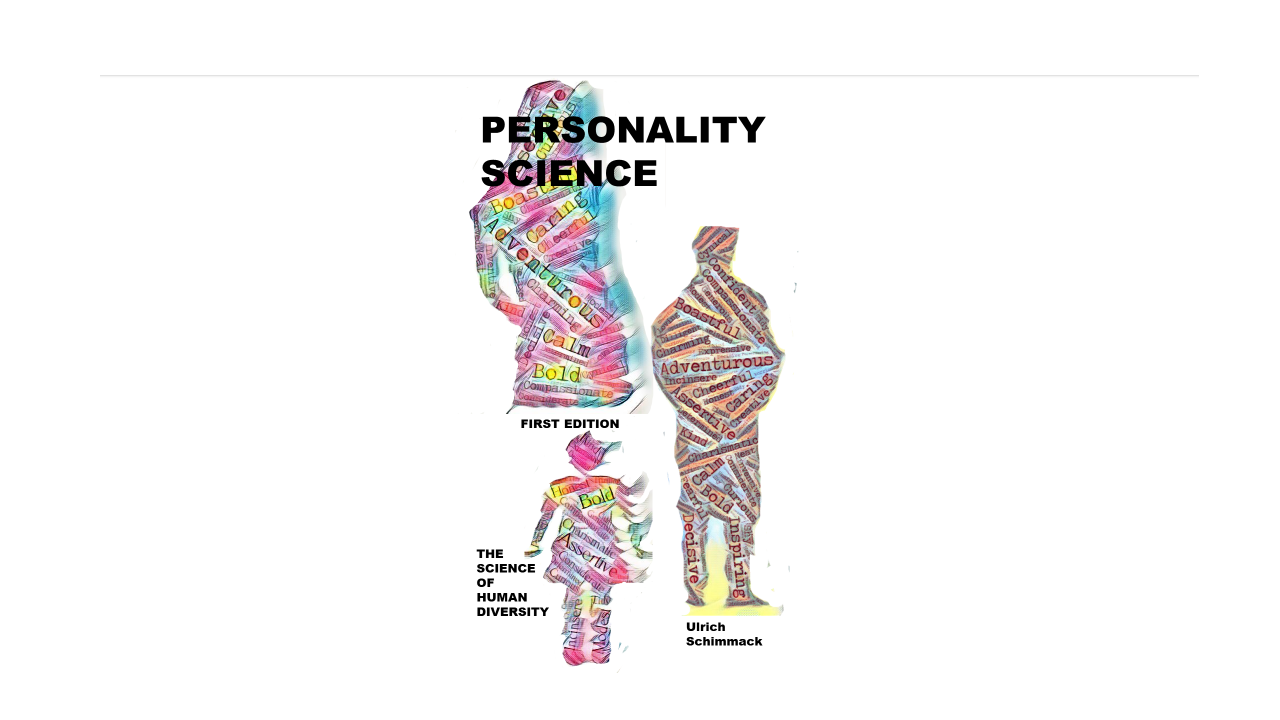
During the COVID-19 pandemic, I was approached by TopHat, an interactive learning platform, to turn my lecture notes into a textbook for their digital classroom system. Having already used iClickers for years, I took the opportunity to merge my teaching materials into a complete digital textbook. The first edition appeared in 2021.
Because it’s an ebook, revisions are easy—but this year, I decided to go further. With the help of ChatGPT as a co-author, I embarked on a full revision. The collaboration made it possible to refine explanations, check facts, locate new sources, and even generate better figures. The second edition now reads more like a traditional textbook—without the smiling stock photos or the $100 price tag that often make students cry.
Unfortunately, TopHat sells textbooks only through its engagement platform, which means the content isn’t accessible to readers outside the classroom. To change that, I’m now sharing the material here on my blog, which has always focused on bringing transparency and rigor to psychological science.
Each chapter summary is freely available with a single click. Full chapters are available to subscribers—subscriptions are free for now and simply provide a bit of moral support to keep this project going. My goal remains the same as when I started teaching over two decades ago:
to help make psychology a real science.